Indian Diplomacy in 2025
India’s foreign policy in 2025 continued to be anchored in the dual ethos of 'Bharat First' and 'VasudhaivaKutumbakam', balancing national interest with global cooperation
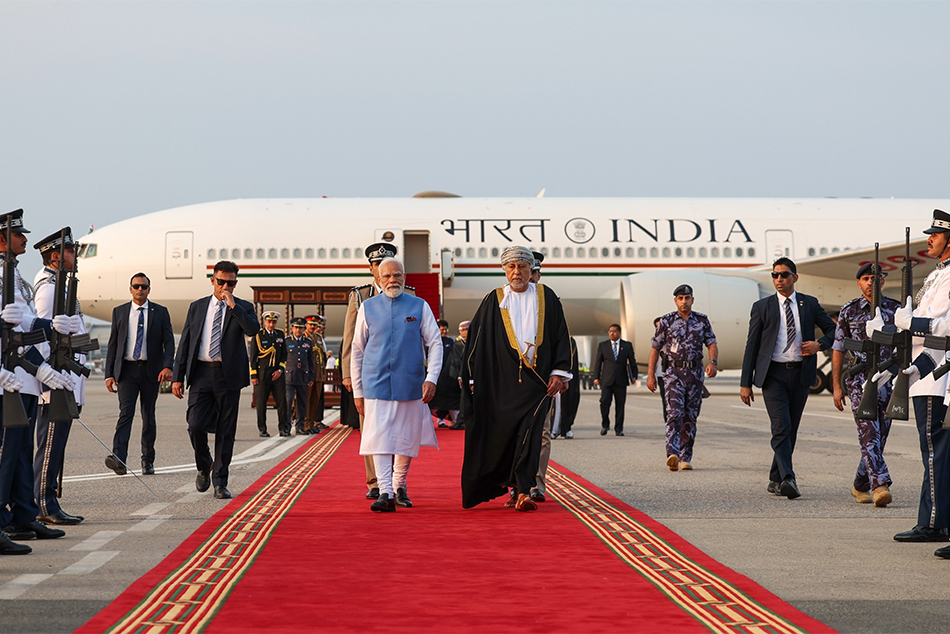
India’s foreign policy in 2025 continued to be anchored in the dual ethos of “Bharat First” and “VasudhaivaKutumbakam,” balancing national interest with global cooperation. Strategic autonomy, non-alignment, and economic diplomacy remained central pillars of its international engagement.
India maintained a multi-aligned posture, strengthening ties across diverse blocs without committing to any single power during the past year. The strategic focus remained on managing relations with the US, China, and Russia, alongside neighbouring countries and major global alliances.
While early 2025 saw optimism with the launch of “Mission 500” to boost bilateral trade to $500 billion by 2030 and a new 10-year defence framework, tensions escalated later in the year. The US imposed 50% tariffs on Indian exports, citing India’s continued oil trade with Russia. India responded firmly, condemning the move and refusing to compromise on its sovereignty.
Meanwhile, India continued to deepen its defence and counterterrorism collaboration with Russia. A high-profile visit by President Putin to India, signalled further expansion of strategic ties.
India and China reached a border patrol agreement in late 2024, restoring patrol routines in contested areas. By mid-2025, direct flights resumed and tourist visas for Chinese citizens were reissued. Defence ministers from both sides reiterated their commitment to de-escalation and trust-building.
India launched its first Africa-India Key Maritime Engagement (AIKEYME) naval exercise in April 2025, co-hosted with Tanzania and involving ten nations. This initiative boosted maritime cooperation and expanded India’s outreach in the Indian Ocean region.
The “Neighbourhood First” policy remained a cornerstone of India’s regional diplomacy. In 2024-25, India extended credit lines and aid to countries like Sri Lanka and leveraged platforms like the G20 to reinforce its regional leadership. With Gulf nations, India has strengthened energy and investment ties, including a landmark treaty with the UAE.
Foreign Minister Jaishankar emphasised the importance of an “Aatmanirbharta” mindset, i.e. self-reliance—as a strategic tool to navigate global turbulence and realise the vision of a developed India.
India also adopted a firm stance on cross-border terrorism. Its military operations like Operation Sindoor and the deployment of drones and AI-based fencing reflected a shift toward security-driven diplomacy. This marked a departure from earlier idealistic approaches to a more assertive foreign policy.
India also forayed to deepen ties with countries like Germany and Japan to leverage technological and strategic strengths amid shifting global dynamics.
For years though, New Delhi has cultivated the image of being a “Vishwaguru” (world teacher), expertly balancing competing global powers while championing the Global South. The guiding doctrine was “strategic autonomy”—the ability to engage with all sides without being beholden to any.
However, 2025 has brutally exposed the limitations of this approach. What was once hailed as diplomatic dexterity is now increasingly viewed by global capitals as transactional aloofness.
Indo-US Ties
The most significant rupture of 2025 has been the rapid cooling of ties with the United States. For years, Washington overlooked New Delhi’s democratic backsliding and protectionist economics, betting on India as a counterweight to China. That bet soured under the new geopolitical realities of 2025.
In 2025, the return of Donald Trump to the White House, after a four-year hiatuslaid bare the false bonhomie of diplomatic relations. The Trump administration’s imposition of hefty tariffs on Indian goods—in retaliation for India’s digital services tax and protectionist barriers—hit the Indian economy hard. Unlike previous administrations that prioritised strategic partnership over trade disputes, the current US approach is strictly transactional.
The diplomatic fallout is not just economic; it is strategic. Washington’s renewed engagement with Pakistan and its criticism of India’s continued purchase of Russian energy signal a loss of India’s “exceptional” status in American foreign policy.
Indo-Russian Ties
Perhaps the most glaring evidence of India’s strategic cul-de-sac is the continued embrace of Vladimir Putin. The Russian President’s visit to India in December 2025 was projected by Indian media as a triumph of independent foreign policy. In reality, it highlighted India’s dwindling options.
While the West tightens the economic noose around Moscow, New Delhi’s decision to deepen energy and trade ties with Russia is no longer viewed as “neutrality”. It is seen as actively underwriting Russia’s war effort in Ukraine. This has alienated India’s European partners who were previously willing to cut India some slack.
The “bear hug” with Putin does not signal strength; it signals a desperate need for energy security and defence spares, regardless of the reputational cost. It reinforces the narrative that India is a spoiler in the international rules-based order, interested only in short-term gain.
India-Canada Ties
Meanwhile, in 2025 the diplomatic crisis with Canada aggravated into a permanent sore. What began as allegations regarding the assassination of Hardeep Singh Nijjar snowballed into a broader reputational crisis. A lawsuit by a Canadian border officer, alleging he was framed by Indian disinformation,kept the issue in global headlines.
New Delhi’s dismissive response—characterising these concerns as mere political pandering by Ottawa— failed to convince Western intelligence communities, who see a pattern of extraterritorial aggression that contradicts India’s claims of being a rule-abiding democracy.
Regional Ties
Closer to home, the “Neighbourhood First” policy lies in tatters. The collapse of the Sheikh Hasina regime in Bangladesh was a catastrophic intelligence and diplomatic failure for New Delhi. By placing all its chips on a single, increasingly unpopular leader, India alienated the Bangladeshi public.
The interim government in Dhaka, led by Muhammad Yunus, has been treated with a cold shoulder by New Delhi, a move that is widely interpreted as petulance rather than prudence. While Indian media amplifies narratives of minority persecution in Bangladesh, New Delhi has shown little appetite for constructive engagement with the new power centres in Dhaka. This void is being rapidly filled by other players, including Pakistan and China, effectively encircling India with indifferent or hostile neighbours.
The Maldives and Sri Lanka, both remained another lost cause, with Male steadily drifting into Beijing’s orbit and Colombo not sticking to the Indian script in spite of India’s financial and security assistance to the island nation. The recurring theme across South Asia in 2025 was clear, India is seen not as a benevolent big brother, but as a meddlesome hegemon that cannot tolerate political dissent in its backyard.
Global Trade
As far as trade is concerned, India had already sensed it needed to change strategies in an uncertain world of shifting alignments, as evidenced by its efforts to diversify its economic partnerships in 2025. The signing of the India-United Kingdom Free Trade Agreement (FTA) in July and fast-forwarding the negotiations for the India-European Union (EU) FTA as seen through the December dialogue and an FTA with New Zealand in December, indicate that New Delhi recognised the new fault lines that the Trump administration’s tariff measures have exposed.
India and the Global South
India’s self-anointed role as the “Voice of the Global South” faced a credibility crisis. Rhetoric aside, the reality is that New Delhi’s capacity to deliver material benefits to developing nations remain limited as compared to China’s deep pockets.
More damaging, however, is the perception of hypocrisy.
On critical issues like the crisis in Gaza, India’s alignment tilted visibly toward Israel and the West, putting it at odds with the very Arab and African nations it claims to lead. The Global South expected solidarity, not equivocation. By trying to please everyone, India has ended up pleasing no one. Developing nations are realising that when the chips are down, India’s “autonomy” often means looking out for itself, leaving vulnerable partners to fend for themselves.
India’s current foreign policy moment is defined by the limits of external balancing and realising the need to develop internal strength. Multi-alignment has proven valuable in securing capital, technology, and diplomatic space, but faltered as a source of reliable support from strategic partners during crises.
The downturn in US-India ties illustrate the contradiction of multi-alignment. In such a context, New Delhi is signalling that its future trajectory will be less about picking “trusted partners” and more about ensuring that no partner becomes indispensable.
2025 will be remembered as the year India’s diplomatic luck ran out. The transition from “strategic autonomy” to “aloofness” is not just a semantic shift; it represents a fundamental failure to build deep, trust-based alliances. By alienating its neighbours, frustrating its Western partners, and offering little more than words to the Global South, India risks entering 2026 as a lonely power—large, loud, but increasingly ignored.
India will continue to work with the United States, Europe, Japan, Russia, and even China where interests overlap, but on issue-based terms that strengthen its internal capacity. The success of Indian foreign policy will ultimately rest not on alliances or rivalries, but on whether internal balancing can deliver the material foundation for India’s great-power aspirations.
In an era of shifting alliances and rising tensions, India’s diplomatic strategy must be both adaptive and resolute. In addition, its strategic focus on Three Ds - Destroy, Deter and Deny remains debatable in terms of overall outcome.
Next year, well thought and focused approach is needed to get the best outcomes. The nation’s ability to maintain its sovereignty while engaging with global powers will define its success on the world stage.
Follow ummid.com WhatsApp Channel for all the latest updates.
Select Language to Translate in Urdu, Hindi, Marathi or Arabic