PM Modi needs to move beyond complaining about past mistakes
Opponents and critics contend that the narrative of a 'mess' by the Modi is a mere political tool to deflect from current shortcomings, such as unemployment, high food inflation, and increased economic inequality, and, of course, an incurable Nehru-complex
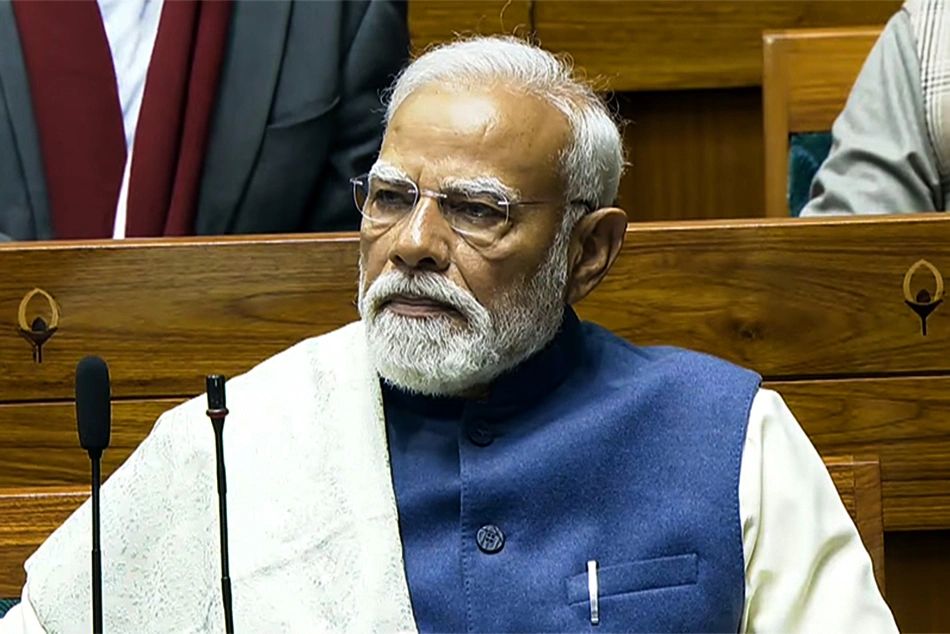
Prime Minister Narendra Modi criticized previous Congress-led governments in the Rajya Sabha, alleging that his administration has had to spend a significant amount of time rectifying “wrongs,” “mistakes,” and “unfinished work” left behind from previous decades. Opponents and critics argue that the narrative of a “mess” is a political tool to deflect from current shortcomings, such as unemployment, high food inflation, and increased economic inequality.
Dr. Satyendra Kumar, Professor, University of Delhi, commenting on the Strate of the economy asserts:
“Crony Capitalism’ under Modi government has created accumulation of wealth in the hands of selected capitalists. Due to a series of faulty economic policies formulated by the Modi government, Indian economy has witnessed worst ever disaster since Independence. Indian Economy was shining during 10 years of UPA government led by globally acclaimed Economist Dr. Man Mohan Singh. But during 10 years of Modi government, Indian Economy is in shambles. Clearly, Modi and his party’s vision of India is stunted by a sense of history and informed policy thinkers.”
By comparison, the Nehruvian vision, focused on building a modern, secular, and industrialized India, sought transitioned a post-colonial, feudal, and agrarian society into a technologically advanced nation. The pillars of it were scientific institutions (IITs, AIIMS), public sector enterprises, and an authentic democracy. Restoring this vision must be Modi’s aim to balance rapid GDP growth with social equity, inclusion, and a democratic, federal structure. The Nehru era established a long-term economic and political framework, balancing socialist-based planning with contemporary economic dimensions.
Nehru achieved rapid industrialization by placing the public sector at “commanding heights” of the economy. The creation of institutions like IITs, AIIMS, and investment in ISRO created the foundation for India’s modern technological and healthcare capabilities.
Opponents and critics contend that the narrative of a “mess” by the Modi is a mere political tool to deflect from current shortcomings, such as unemployment, high food inflation, and increased economic inequality, and, of course, an incurable Nehru-complex.
Detractors contend that decisions like demonetization in 2016 and the implementation of GST, while intended to formalize the economy, resulted in short-term distress for MSMEs and contributed to job losses and was devoid of sound economic sense. Take a glance at the failures:
45-year high unemployment rate. 45.4% among youth in 2022-23, stagnant wages for the middle class, manufacturing sector share falling to 14.3% by 2023. Unemployment a 45-year high, youth aged 20–24 experiencing unemployment in 2022-23. Approximately 450 million working-age Indians are not working or seeking work.
The “Make in India” initiative miserably failed to boost manufacturing – its share in GDP falling from 16.7% (2013-14) to 15.9% (2023-24). Manufacturing as a percentage of GDP fell from 18.9%. in 2008 to 14.3% in 2023, failing to achieve job creation. Middle-class are stagnated around 10.5 lakh rupees per yea, effectively halving in real terms due to inflation. Rural consumption witnesses unprecedented declines.
The long-term negative impact of the 2016 demonetisation and the complex implementation of the Goods and Services Tax (GST), which severely affected the small-scale industrial sector is solely on Modi’s culpability. Investment as a percentage of GDP dropped from an average of 33.4% during the previous administration to 28.7% in the following decade.
A 50-year low in the household savings rate was the fallout. Critics emphasize that these structural issues, combined with high inflation, have led to a period of “economic despair” for a large portion of the population. Detractors also point out that many initiatives, such as the Direct Benefit Transfer (DBT), were initiated or planned during the previous UPA regime, but were rebranded and scaled up.
The implementation of GST, while intended to formalize the economy, resulted in distress for MSMEs and contributed to job losses.
The promised 2 crore jobs annually did not materialize. Instead, youth unemployment rose significantly and workforce under 30 shrinking from 10.34 crore to 7 crore by 2022-23. Stagnant rural wages, weak agricultural growth, and high, unchecked fuel prices despite low international oil prices. Public expenditure on education has remained below 3% of GDP, and health expenditure has seen declines, falling to 1.9% of GDP in 2024-25.
Capital flight has seen an increase in wealthy individuals leaving India indicates low confidence in the economic landscape. These factors, combined with falling private investment and a high-tax regime on fuel, have led to harsh critiques of the overall management of the economy.
Flagship initiatives “Atmanirbhar Bharat” (Self-Reliant India) designed to boost the sector, GDP has remained largely stagnant or declined, falling from around 16–18% in the years preceding 2014 to approximately 13–15% by 2022-2023. Rhetoric aside, reliance on imports, particularly for intermediate goods and active pharmaceutical ingredients (APIs) from China, has increased.
The share of manufacturing in India’s GDP fell from 18.9% in 2008 to roughly 14.3% by 2023. Despite the “Make in India” goal to increase this to 25%, the sector’s contribution has not significantly improved. Manufacturing employment reports indicate jobs in the sector halved between 2016 and 2021. The share of manufacturing in the workforce declined from 12.6% in 2011-12 to 11.6% in 2021-22.
Sudden policy shifts – demonetization and the unplanned Goods and Services Tax (GST), severely impacted small-scale industries and MSMEs, leading to closures and job losses.
“Make in India” lags despite the hype. Compared to the flimflam, sectors like electronics manufacturing (e.g., iPhones) have seen increased investment, the overall manufacturing growth rate is below expectations. Based on analyses of union budgets and expenditure profiles during the Narendra Modi administration (2014–present), “unbudgeted” or, more accurately, under-spent and diverted funds have been a notable feature, often contrasting with high-profile budgetary announcements. While capital expenditure on infrastructure has increased, significant gaps exist between budgeted allocations and actual expenditure in key social and welfare sectors.
While the government announces large allocations for welfare, the actual utilization is often much lower. The PM Karam Yogi Maan Dhan (pension scheme) for small shopkeepers spent only 20.7% of its allocated budget in its first two years. Similarly, the PM Shram Yogi Maan Dhan saw expenditure of just 58.6% of the promised amount in the latest fiscal year. The Ministry of Tribal Affairs aimed for 740 Eklavya schools by 2025-26, but had built a measly 401 by December 2023, underutilizing allocated funds.
Rural Employment (MGNREGA), despite high demand, budget allocations for MGNREGA was frequently reduced, delayed payments and unspent funds and has now been wiped out pretending a name-change would hide the failure. Substantial funds in schemes for SC, ST, and minorities have been left unspent or reduced in revised estimates.
The government has increased the use of cesses and surcharges, which are not shared with state governments. Former officials have recounted scenarios where the central budget had to be “recast” at the last minute to accommodate, higher transfers to states, triggering drastic cuts in welfare allocations for women and children.
The informal sector serves as a massive, often invisible, engine for economic growth in developing nations, contributing substantially to GDP while its workers receive minimal social, legal, or financial protection. In India, the informal sector employs approximately 85-90% of the workforce, yet these individuals frequently work in precarious conditions, with low wages and no social security benefits, such as health insurance or pensions.
The informal sector employs roughly 80-90% of India’s workforce and contributes significantly to the economy, with estimates ranging from 50% to over 60% of India’s Gross Value Added (GVA) in various reports. Workers in the informal sector are highly vulnerable to financial hardships, lacking health insurance, pensions, or unemployment benefits. Most informal workers are underpaid and face high job insecurity, often working in unsafe conditions.
MSMEs, often suffer from low productivity and lack access to formal credit or technology, keeping them in a “low-productivity trap”. Workers often lack employment contracts and have little-to-no recourse for grievances, leading to exploitation. There needs to be policy support to the exclusive needs of the informal sector, not merely as an illegal entity. It is crucial that there are avenues to remove disparity between the sector’s contribution and the support it receives as being crucial for inclusive growth.
In summary, the Modi era has been characterized by capital expenditure expansion, accompanied by a consistent pattern of under-utilization of funds in social welfare schemes and a heavy reliance on unshared tax revenue
Dumping the path of economic concentration via oligarchs and democratizing the economy to include all sectors requires a deliberate shift from crony capitalism to competitive markets. Evidence suggests this requires dismantling monopolistic control, fostering SME growth, and implementing targeted policy reforms. This means dismantling large conglomerates that stifle competition in sectors like tech, energy, and infrastructure. Special licenses, regulatory protections, and preferential treatment must be done with. Taxation must target top earners and corporates.
Based on the analysis of India’s current economic trajectory and reform agenda leading into 2026, Prime Minister Modi can move beyond focusing on past economic constraints by pivoting to a “forward-looking consensus” model that utilizes digital public infrastructure (DPI) and manufacturing incentives to drive the next phase of growth. The shift involves moving from a rhetoric of “correcting the past” to a strategy of “building the future”.
By focusing on the “next-generation reforms” of 2025-2026 – such as the new Income Tax Act, AI adoption, and the strengthening of the manufacturing base – the government can transition from blaming the past to creating a “pro-growth, pro-entrepreneur” environment. The tools to transform the economy are already in place; success now depends on the speed of implementation and the ability to build consensus on future-ready reforms.
Like it or not, the BJP must adopt a paradigm shift by contemporizing Nehru’s vision of prioritizing social equality, democratic processes, and the removal of caste/class discrimination, fostering industrialization, building critical infrastructure, and strengthening just democratic institutions.
[The writer, Dr. Ranjan Solomon, has worked in social justice movements since he was 19 years of age. After an accumulated period of 58 years working with oppressed and marginalized groups locally, nationally, and internationally, he has now turned a researcher-freelance writer focussed on questions of global and local/national justice. Since the First Intifada in 1987, Ranjan Solomon has stayed in close solidarity with the Palestinian struggle for freedom from Israeli occupation, and the cruel apartheid system. He has initiated solidarity groups in India, Afro-Asia-Pacific alliance, and at the global level. Ranjan Solomon can be contacted at ranjan.solomon@gmail.com.]
Follow ummid.com WhatsApp Channel for all the latest updates.
Select Language to Translate in Urdu, Hindi, Marathi or Arabic