Dr Ambedkar’s Critique of Islam and Muslims: A Scholarly Analysis
This paper undertakes a critical re-evaluation of Dr. B.R. Ambedkar’s seminal critique of Indian Muslims as articulated in his 1940 treatise, Pakistan or the Partition of India
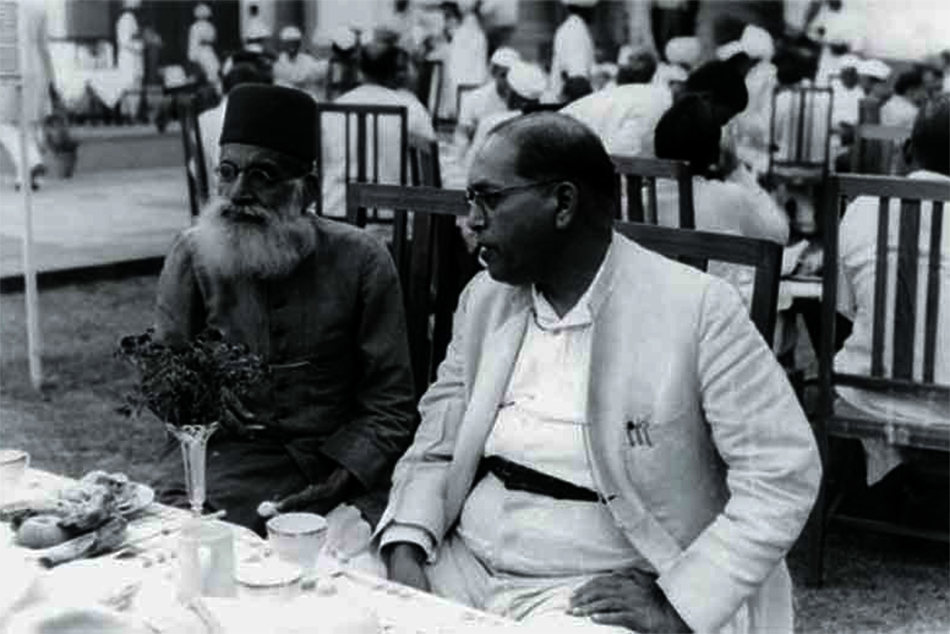
This paper undertakes a critical re-evaluation of Dr. B.R. Ambedkar’s seminal critique of Indian Muslims as articulated in his 1940 treatise, Pakistan or the Partition of India.
While Ambedkar is rightfully celebrated as the architect of the Indian Constitution and the crusader against caste Hinduism, his scathing assessment of Islamic sociology and history remains a point of contention, often misappropriated by majoritarian political forces.
This study argues that while Ambedkar’s sociological indictment regarding caste stratification and resistance to reform within the Muslim community was — and remains, empirically accurate, his theological and historical conclusions require revision.
By deploying a tri-fold methodology - utilizing Quranic exegesis to counter charges of theological insularity, subaltern historiography (specifically the work of K.N. Panikkar) to re-examine the Malabar Rebellion, and the sociological lens of Anand Teltumbde to address the Pasmanda question, this paper establishes a framework for a reading Ambedkar in fresh light. It posits that a synthesis of Ambedkar’s Prabuddha ethos and the Quranic concept of Adl (Justice) offers the only viable pathway against the “calamity” of majoritarian hegemony.
The Ethical Cosmos of B.R. Ambedkar
The philosophical architecture of Dr. B.R. Ambedkar cannot be reduced to a mere legalistic framework or a political strategy for the upliftment of the Untouchables. It is, fundamentally, a profound ethical system rooted in the triumvirate of liberty, equality, and fraternity. While contemporary political discourse often traces these ideals to the Enlightenment and the French Revolution, Ambedkar explicitly disavowed this Western genealogy. In a move that was both radical and restorative, he rooted his philosophy in the indigenous spiritual soil of India — specifically, the Dhamma of the Buddha. As he asserted:
“My philosophy has roots in religion and not in political science. I have derived them from the teachings of my Master, the Buddha” (Ahir, p.158).
For Ambedkar, the distinction between the secular and the spiritual was not one of antagonism but of function. He posited that “religion — in the sense of spirituality, is essential for the progress of mankind” (Ambedkar, Philosophy of Hinduism, p.22).
In his view, religion serves as the moral foundation of a society’s collective conscience, acting as the arbiter of social ethics. Consequently, the validity of any religious system is contingent upon its utility to human welfare. Ambedkar established a rigorous metric for this evaluation: any theology that fails to uphold equality, justice, fraternity, and human dignity is rendered morally obsolete and socially hypocritical.
It was through this uncompromising ethical lens that Ambedkar deconstructed the graded inequality of caste Hinduism and the exclusionary ideology of Hindutva. He dismantled the Manusmriti not out of malice, but out of a desire for a society based on reason. However, his intellectual rigor was impartial; he applied the same diagnostic scalpel to the Muslim community. In his seminal 1940 treatise, Pakistan or the Partition of India, Ambedkar offered a scathing critique of Indian Muslims, identifying sociological stagnation, political insularity, and a resistance to reform as significant barriers to national integration.
This volume seeks to revisit Ambedkar’s critique not to dismiss it, nor to apologize for the failures of the Muslim community, but to engage with it dialectically. The thesis proposed herein is that while Ambedkar’s criticisms were largely accurate regarding the sociological reality of Indian Muslims in the 1940s — and indeed, remain relevant to the internal reform needed today, these realities represent a deviation from the theological core of Islam.
Furthermore, regarding his historical critique of the Malabar Rebellion, this work argues that Ambedkar relied on colonial and elite-nationalist archives that obscured the subaltern, anti-imperial nature of the uprising. By synthesizing the sociological insights of Anand Teltumbde, the historiography of K.N. Panikkar, and a direct exegesis of the Quran, this work aims to lay the foundation for a “Civilizational Alliance” between Ambedkarites and Muslims, grounded in shared values of justice (Adl) and fraternity (Maitri).
Deconstructing the Six Critiques
To engage with Ambedkar’s assessment, one must first understand the gravity of his charges. In Pakistan or the Partition of India, Ambedkar articulated six major criticisms that painted a picture of a community retreating into a “closed corporation.” These were not the casual observations of a bystander but the frustrations of a statesman seeking a unified, democratic ethic.
1. Insular Brotherhood
Ambedkar argued that the Islamic concept of brotherhood is not universal but strictly confined to the Ummah (community of believers). He famously wrote:
“The brotherhood of Islam is not the universal brotherhood of man. It is brotherhood of Muslims for Muslims only… For those who are outside the corporation, there is nothing but contempt and enmity” (Ambedkar, Pakistan, p.340).
This critique strikes at the heart of democratic living, suggesting that Muslims are theoretically incapable of viewing a non-Muslim as a civic equal.
2. Exclusivism
He contended that Muslims claim exclusive access to spiritual truth, which inherently creates a barrier to a pluralistic democratic life. If salvation is the monopoly of one group, equality becomes a theological impossibility.
For Ambedkar, a claim to “finality” of truth was the enemy of reason and social osmosis.
3. Resistance to Reform
Ambedkar observed a profound stagnation within the community, noting that Indian Muslim leadership displayed a “complete absence of the desire for change” and a hostility toward social reform that was more rigid than that of conservative Hindus (Ambedkar, Pakistan, p.253).
He lamented that while Turkey under Atatürk was modernizing, Indian Islam remained frozen in feudalism.
4. Social Stratification (Caste)
Despite the theoretical egalitarianism of Islam, Ambedkar highlighted the presence of a caste-like hierarchy among Indian Muslims—specifically the divide between the Ashraf (foreign descent/upper caste) and the Ajlaf (indigenous converts), along with the Arzal (degraded castes). He noted:
“The Muslims have all the social evils of the Hindus and something more” (Ambedkar, Pakistan, p.230).
5. Subjugation of Women
He offered a stinging critique of the treatment of Muslim women, particularly the practice of purdah (seclusion) and the burqa.
He argued that these practices caused physical degeneration and spiritual atrophy, rendering women second-class citizens and preventing the socialization of the younger generation (Ambedkar, Pakistan, p.230-233).
6. The Malabar Rebellion (1921)
Finally, Ambedkar characterized the Mappila Rebellion as a communal outburst of “Muslim fanaticism” primarily targeting Hindus, describing it as a “Jehad” rather than a nationalist uprising (Ambedkar, Pakistan, p.163).
These critiques form the bedrock of the “Ambedkarite” scepticism toward Muslims often exploited by right-wing forces today.
However, a scholarly re-evaluation reveals that these points act as a mirror: Reflecting the practice of Muslims while often obscuring the principles of the Quran.
Universalism vs. Insular Brotherhood
The gap between Ambedkar’s sociological observation and Islamic theology is most visible in the concepts of brotherhood and pluralism. While Ambedkar correctly identified the “insular” behaviour of the Muslim community of his time — a community circling the wagons in the face of political uncertainty, he did not engage with the Quranic text, which stands in direct opposition to such insularity.
Ambedkar’s charge of “Insular Brotherhood” suggests that Islam is inherently tribal. Sociologically, this is often true; practices like Zakat (charity) are frequently distributed only within the community by conservative clergy. However, this is a violation of the Quranic mandate.
Quran frames the Muslim community not as a tribe, but as an ethical vanguard for humanity. Quran declares:
“You are the best community raised for humankind (li-n-nas) — you enjoin what is right, forbid what is wrong, and believe in God” (Quran 3:110).
The preposition li-n-nas (“for the people” or “for humankind”) is pivotal. It implies that the raison d’etre of the Muslim requires service to humanity at large, not merely self-preservation. The “best community” is defined by its utility to the world, not its domination over it.
Furthermore, the Quranic concept of charity is boundless. When listing the beneficiaries of Zakat in the Quran, the text includes “the poor, the needy, the indebted, the traveller” (Q.9:60). It does not qualify these categories with faith. Similarly, the Quran explicitly commands charity to “parents, relatives, orphans, and the needy” regardless of their creed (Q.2:215).
The existential journey proposed by the Quran is the transition from tribalism to universalism. It acknowledges diversity as a divine design:
“O humankind, indeed We have created you from male and female and made you peoples and tribes that you may know one another (li-ta’arafu). Indeed, the most noble of you in the sight of God is the most righteous” (Q.49:13).
Here, the “other” is not an enemy to be conquered but a variation to be understood. The criterion for nobility is Taqwa (God-consciousness/righteousness), not membership in the “corporation” of Islam. Thus, the “Insular Brotherhood” Ambedkar criticized is a sociological corruption, not a theological tenet.
The Divine Will in Diversity
Ambedkar’s second critique — that Muslims claim exclusive truth, is contradicted by the Quran’s affirmation of religious pluralism. Quran does not envision a monolithic world; rather, it validates the existence of multiple paths to the Divine.
Quran asserts:
“For each community We have appointed a law and a path. If God had willed, He could have made you one community… So compete in doing good” (Quran 5:48).
This verse fundamentally alters the nature of inter-religious interaction from one of conquest to one of “competitive righteousness.” The divine will explicitly prevent a theological monopoly.
Moreover, Quran explicitly extends salvation beyond the borders of Islam:
“Indeed, those who believe and those who are Jews and Christians and Sabians—whoever believes in God and the Last Day and does righteousness—will have their reward with their Lord” (Q.2:62).
This theological pluralism aligns with Ambedkar’s own desire for a society based on reason and mutual respect. The exclusivism practiced by the clergy is a historical construct, often born of political empire, which obscures the Quranic vision of a spiritual democracy.
Caste, Gender, and the Reformist Deficit
Having established the theological baseline, we must address the “internal” critiques—Resistance to Reform, Social Stratification, and the Status of Women. Here, Ambedkar’s analysis is analytically precise and remains a necessary mirror for the Indian Muslim community.
Ambedkar was right:
“If slavery has gone, caste among Musalmans has remained” (Ambedkar, Pakistan, p.230).
The Ashraf-Ajlaf divide is a caste system in all but name, replicating the Brahmanical hierarchy of purity and pollution. Anand Teltumbde notes that the Ashraf elite have historically used the “myth of the monolithic Muslim community” to secure their own interests while marginalizing the indigenous Pasmanda (Dalit/Backward) Muslims (Teltumbde, p.62).
This stratification is a direct assault on the Prophet’s Last Sermon, which proclaimed, “An Arab has no superiority over a non-Arab, nor a white over a black… except by piety.” The persistence of caste among Muslims is the point of greatest convergence for a Dalit-Muslim alliance. It requires the Muslim community to admit that while their theology is egalitarian, their sociology is Brahmanical. The denial of this reality by Muslim leadership validates Ambedkar’s accusation of hypocrisy.
Ambedkar measured progress by the status of women. His critique of purdah was a critique of the seclusion that denies women agency. While patriarchal interpretations have dominated Islamic jurisprudence, the Quranic text offers a liberatory framework. It establishes men and women as Awliya (protectors/friends) of one another (Q.9:71) and celebrates the political sovereignty of the Queen of Sheba (Bilqis), who rules a democratic court (Q.27:22-44). The reformist agenda today must be to reclaim this Quranic feminism against the patriarchal cultural accretions Ambedkar rightly condemned.
The Malabar Rebellion — Myth, Memory, and Colonial Archives
Of Dr. Ambedkar’s six criticisms against the Muslim community, none is as historically fraught or politically weaponized as his assessment of the Malabar Rebellion (also known as the Mappila Rebellion) of 1921.
In Pakistan or the Partition of India, Ambedkar offered a harrowing characterization of the uprising, describing it not as a nationalist struggle but as a communal eruption. He wrote:
“The blood-curdling atrocities committed by the Moplas in Malabar against the Hindus were indescribable… It was not a Hindu-Moslem riot. It was a Jehad” (Ambedkar, Pakistan, p.163).
Ambedkar’s interpretation has since been canonized by the Hindu Right to argue that Muslim political mobilization is inherently anti-national and genocidal. However, a rigorous, progressive, and secular historiography demands that we excavate the socio-economic and anti-imperial foundations of this event.
To accept Ambedkar’s judgment on this specific point without scrutiny is to ignore the epistemic limitations of the sources available to him in the 1940s — primarily colonial administrative records and elite nationalist accounts, and to overlook the subaltern reality of the Mappila peasantry.
To understand the violence of 1921, one must first understand the structural violence of the preceding century. The rebellion did not occur in a vacuum of religious fanaticism; it erupted from the pressure cooker of colonial agrarian extraction.
K.N. Panikkar, in his magisterial work Against Lord and State, demonstrates that the conflict was fundamentally rooted in the land tenure system of Malabar. The British colonial administration, seeking stable revenue, had solidified the absolute property rights of the Janmis (landlords), who were predominantly Nambudiri Brahmins and Nair elites. In contrast, the Verumpattamdars (tenants-at-will) and agricultural labourers were overwhelmingly Mappila Muslims and lower-caste Hindus (Thiyyas and Cherumars) (Panikkar, p.75-80).
Under British law, the Janmis were granted the power of arbitrary eviction (melcharth) and rack-renting. The Mappila peasantry faced a dual oppression: the economic exploitation by the feudal Janmi and the political coercion of the British police state. Panikkar argues:
“The Mappila peasantry was caught in the web of the landlord’s oppression and the state’s coercion… The religious ideology provided the necessary solidarity for the peasantry to organize against their exploiters” (Panikkar, p.105).
Thus, when the rebellion broke out, the targets were not “Hindus” qua Hindus, but the symbols of feudal and colonial authority—the Janmi manor houses (illams), land records, and police stations. The violence was vertical (class-based), attacking the hierarchy of power, before it became horizontal (communal).
Why did Ambedkar view this class struggle as a “Jehad”?
The answer lies in the success of the colonial narrative. The British administration had a vested interest in framing the rebellion as “Muslim fanaticism” for two strategic reasons. First, it delegitimized the genuine grievances of the peasantry, absolving the colonial state of its role in creating the famine-like conditions. Second, and more crucially, it served to fracture the burgeoning Hindu-Muslim unity that had been forged during the Khilafat and Non-Cooperation Movements (Teltumbde, p.115).
Anand Teltumbde notes that Ambedkar, writing his critique two decades after the event, relied on the “official” narrative which highlighted Mappila brutality while erasing British state terror (Teltumbde, p.25). The colonial state committed atrocities of a genocidal scale: over 2,337 Mappilas were killed, 1,652 wounded, and 45,404 imprisoned (Panikkar, p.208). The infamous “Wagon Tragedy” of November 1921, where 67 Mappila prisoners were suffocated to death in a sealed railway goods wagon, remains a stark testament to British brutality—a detail often absents from the “fanaticism” discourse. By focusing solely on the Mappila violence, the colonial archive—and by extension, Ambedkar’s critique—rendered the state’s violence invisible.
Scholars must approach Ambedkar’s critique of the Malabar Rebellion with what might be termed “critical empathy.” Ambedkar was not wrong about the fact of violence against Hindus; he was arguably mistaken about its nature. He correctly identified the trauma inflicted upon the region, but his analysis lacked the materialist framework to see the agrarian engine driving the “religious” vehicle.
Today, revisiting this critique requires us to reject the binary of “Nationalist Hero” vs. “Communal Fanatic.” The Mappila rebel was an anti-imperialist combatant driven by hunger and dignity, whose resistance was inevitably colored by the religious language available to him. To dismiss the entire rebellion as a “Jehad,” as Ambedkar did, is to inadvertently validate the colonial logic he otherwise spent his life dismantling.
The Politics of Misappropriation and “Selective Amnesia”
In the contemporary socio-political landscape of India, Dr. Ambedkar’s critique of Muslims has been excavated from its 1940s context and weaponized to serve a majoritarian agenda. Political forces antithetical to Ambedkar’s broader philosophy of equality frequently cite Pakistan or the Partition of India to justify the marginalization of Muslims, arguing that Ambedkar viewed the community as fundamentally “anti-national.”
This misappropriation relies on a deliberate “selective amnesia.” It amplifies Ambedkar’s critique of the Malabar Rebellion and Muslim insularity while silencing his far more extensive and systemic critique of Hinduism’s graded inequality. As Anand Teltumbde incisively argues, the project to “saffronize” Ambedkar requires stripping him of his radical anti-caste core and reducing him to a mere critic of Islamic separatism (Teltumbde, p.14).
It is crucial to distinguish between Ambedkar’s intent and the current usage of his text. Ambedkar’s critique was a “constructive warning” issued to a community he believed was retreating into feudal stagnation. He wanted the Muslim community to reform itself so it could be a robust partner in the democratic project. He did not write his critique to provide a warrant for the persecution of Muslims in a Hindu Rashtra.
On the contrary, Ambedkar explicitly identified the establishment of a “Hindu Raj” as the ultimate peril. His famous declaration remains the definitive rebuttal to those who appropriate him:
“If Hindu Raj does become a fact, it will, no doubt, be the greatest calamity for this country… It is a menace to liberty, equality and fraternity. On that account it is incompatible with democracy. Hindu Raj must be prevented at any cost” (Ambedkar, Pakistan, p.358).
Therefore, any political reading that uses Ambedkar to justify Muslim exclusion while simultaneously advancing the cause of “Hindu Raj” acts in direct violation of Ambedkar’s stated political will.
The defence against this misappropriation lies in the Constitution itself. Ambedkar’s Constitution is a document of “Constitutional Morality”—a secular, pluralistic covenant. Interestingly, this resonates with the Islamic concept of Mithaq (Covenant), specifically the Constitution of Medina drafted by the Prophet Muhammad. That document established a political community (Ummah) comprised of Muslims, Jews, and Pagans, all granted equal rights and mutual defense obligations.
A re-evaluation of Ambedkar’s legacy suggests that the Indian Constitution is the modern Mithaq for Indian Muslims. Adhering to it is not merely a civic duty but, from a Quranic perspective, a religious obligation to honour one’s contracts (Uqud) (Quran 5:1). Thus, the “anti-national” charge Ambedkar feared is nullified when Muslims reclaim the Constitution as their sacred covenant of citizenship.
The Pasmanda Bridge and the Civilizational Alliance
How do we move from critique to construction? The re-evaluation of Ambedkar’s criticisms provides the blueprint for a “Civilizational Alliance” between the Dalits (Ambedkarites) and the Muslims. This alliance cannot be a superficial electoral pact; it must be a deep social transformation.
The most formidable barrier to this alliance has been the caste denialism of the Ashraf Muslim elite. Ambedkar’s critique of caste among Muslims was accurate and remains urgent. The rise of the Pasmanda Muslim Movement (representing the Dalit and Backward Caste Muslims) vindicates Ambedkar’s sociology.
For a genuine alliance, the hegemony of the Ashraf leadership — which often prioritizes emotional issues (like the preservation of conservative personal laws) over material issues (education, jobs, security), must be challenged. The Pasmanda movement offers a bridge: it shares the “Dalit experience” of caste oppression and the “Muslim experience” of religious marginalization.
An Ambedkarite-Muslim alliance must be led by the subalterns of both communities. As Teltumbde notes:
“The Dalit-Muslim unity is not a unity of religion, but a unity of the proletariat” (Teltumbde, p.145).
The Muslim community must institutionally acknowledge the existence of caste and apply the Quranic egalitarianism (Quran 49:13) to dismantle it, thereby fulfilling Ambedkar’s demand for reform.
At a philosophical level, the alliance finds ground in the convergence of Maitri (Buddhist Loving-Kindness) and Rahma (Islamic Mercy).
- Ambedkar’s Maitri: For Ambedkar, fraternity was not just a political concept but a spiritual one—Maitri—which extends benevolence to all beings.
- Quranic Rahma: The Quran describes the Prophet as Rahmatan li-l-Alamin (A Mercy to the Worlds) (Q.21:107).
Both traditions reject the “survival of the fittest” (the logic of caste/capitalism) in favor of the “survival of the weakest” (the logic of care/social justice). This ethical convergence allows for a shared language of resistance against hate.
The Mirror and the Lamp
This study has traversed the landscape of Dr. B.R. Ambedkar’s critique of Muslims, subjecting it to the twin lights of Quranic theology and post-colonial historiography.
- On Insularity and Exclusivism: We found that while Ambedkar correctly diagnosed the sociological isolation of the Indian Muslim community, his critique does not apply to the theological core of Islam, which is radically universalist (Quran 3:110) and pluralist (Quran 5:48).
- On Social Evils (Caste/Gender): We validated Ambedkar’s critique of caste (Ashraf-Ajlaf) and gender injustice as irrefutable sociological realities. These are internal betrayals of the Quranic ethos that the community must urgently reform.
- On the Malabar Rebellion: We revised Ambedkar’s judgment using the archival work of K.N. Panikkar, concluding that Ambedkar relied on colonial narratives that erased the anti-imperial and agrarian nature of the uprising, mischaracterizing a class war as a pure “Jehad.”
Dr. Ambedkar acts as a “Critical Friend” to the Muslim community. His harsh words were a mirror held up to a stagnating society. Instead of breaking the mirror, the Muslim community must use it to clean its face.
The “Re-Evaluation” proposed in this work is not a rejection of Ambedkar, but an expansion of his vision. It calls for an Indian Islam that is Prabuddha (Enlightened) — free from caste, gender-just, and deeply integrated into the democratic fabric. Simultaneously, it calls for an Ambedkarite movement that recognizes the Muslim not as the “Other,” but as a co-sufferer and a co-traveler in the long march toward the “City of Virtue” (Prabuddha Bharat).
In the final analysis, the destiny of the Dalit and the Muslim in India is indivisible. They swim or sink together. By synthesizing the constitutional morality of Ambedkar with the universal justice of Quran, we can forge a republic that is truly inclusive, humanistic, and liberatory.
Bibliography
Ahir, D. C. The Legacy of Dr. Ambedkar. New Delhi: B. R. Publishing, 1990.
Ambedkar, B. R. The Buddha and His Dhamma. Mumbai: Siddharth College Publication, 1957.
Ambedkar, B. R. The Philosophy of Hinduism. New Delhi: Critical Quest, 2010.
Ambedkar, B. R. Pakistan or the Partition of India. 2nd ed. Mumbai: Thacker and Company, 1946.
Ambedkar, B. R. Annihilation of Caste. New Delhi: Navayana, 2014.
The Quran. Translated by M. A. S. Abdel Haleem. Oxford: Oxford University Press, 2004.
Panikkar, K. N. Against Lord and State: Religion and Peasant Uprisings in Malabar, 1836–1921. Delhi: Oxford University Press, 1989.
Teltumbde, Anand. Ambedkar on Muslims: Myths and Facts. Hyderabad: Vow Foundation, 2003.
Teltumbde. Republic of Caste: Thinking Equality in the Time of Neoliberal Hindutva. New Delhi: Navayana, 2018.
[V.A. Mohamad Ashrof is an independent Indian scholar specializing in Islamic humanism. With a deep commitment to advancing Quranic hermeneutics that prioritize human well-being, peace, and progress, his work aims to foster a just society, encourage critical thinking, and promote inclusive discourse and peaceful coexistence. He is dedicated to creating pathways for meaningful social change and intellectual growth through his scholarship. He can be reached at vamashrof@gmail.com.]
Follow ummid.com WhatsApp Channel for all the latest updates.
Select Language to Translate in Urdu, Hindi, Marathi or Arabic