Explainer: How AI is Reshaping India’s Waste Ecosystem
When waste is traced, trusted, and treated as an asset, it no longer marks the end of a product’s journey. It becomes the starting point of a smarter, more circular economy, and this is exactly what Recykal is doing
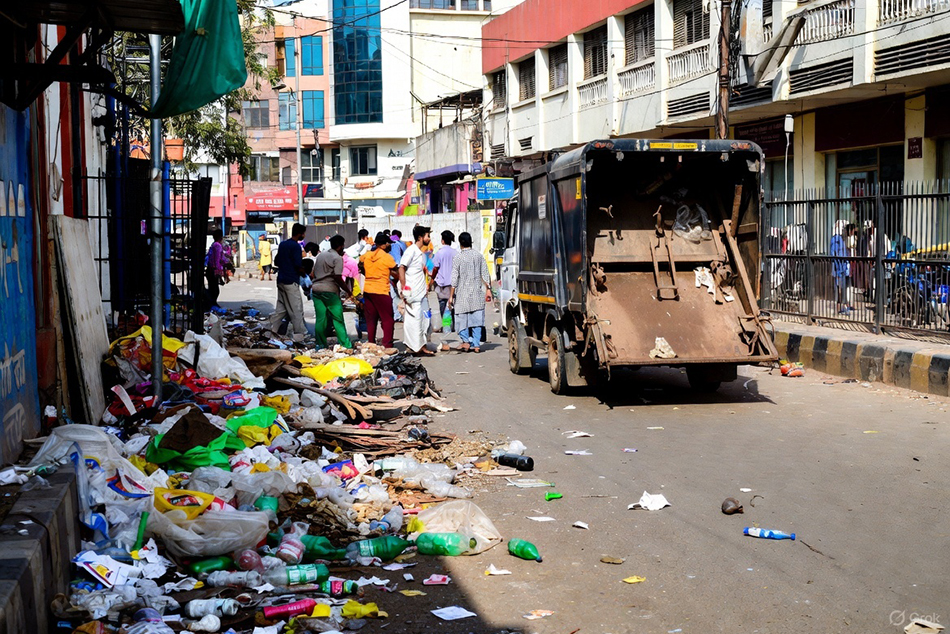
India’s waste challenge is often viewed as one of scale, but at its core, it is a problem of structure. Fragmentation, informality, and a persistent lack of trust have long constrained the ecosystem.
Our dominant attitude towards waste remains “out of sight, out of mind,” ignoring the fact that what households discard holds significant economic value.
Millions of livelihoods in India’s informal recycling economy depend on this material. When waste is mixed and contaminated, that value is destroyed, making recyclables unsafe and unviable. Globally, technology is reshaping this equation.
According to Cognitive Market Research, the smart waste management market is expected to reach USD 3.75 billion in 2025 and grow at a CAGR of over 16% through 2033. This growth reflects a broader shift: waste systems are transitioning from manual, reactive operations towards data-driven, intelligent networks that preserve value across the lifecycle.
The Real Bottleneck is Flow, Not Collection
For decades, waste management efforts focused largely on collection. However, collection alone does not create value. Waste is generated in varying volumes, with varying degrees of quality, while recycling capacity remains concentrated in select geographic areas.
This imbalance means that recyclers operating formal facilities often struggle more with sourcing reliable material than with processing it. The result is inefficiency, pricing disputes, and large-scale economic loss. This challenge led us to found Recykal in 2016.
Early on, we realised that simply digitising transactions was not enough. Waste does not follow traditional commodity pricing logic; small shifts in supply or quality can drastically affect prices and, by extension, livelihoods. To address this, we developed AI models capable of predicting near-term pricing trends, enabling buyers and sellers to transact with greater confidence and make faster decisions.
We also implemented document AI solutions to remotely authenticate weighbridge slips, invoices, and regulatory paperwork, tying each transaction to verified data sources.
Recykal’s early AI systems were built to classify and verify materials. Over time, these models have evolved into agentic GenAI systems that can independently validate complex transactions. This capability is now used on platforms supporting companies which operate under Extended Producer Responsibility (EPR) regulations.
The EPR compliance relies heavily on documentation, often spanning thousands of records. To address this, Recykal deploys GenAI agents that read, corroborate, and assess the authenticity of documents.
In this process, the creator agent first extracts and structures information post which the reviewer agent validates the output, much like a human auditor, and a third audit agent performs sample checks to ensure accuracy and integrity across the system. Together, these layers have brought speed, trust, and consistency to regulatory compliance adhering to EPR guidelines.
Value Begins at the Household
The breakthrough, however, came from acknowledging that material quality is determined much earlier in homes and communities. To address the issue of recyclables being lost at the source, we piloted a programme across nearly 13,000 households in Latur and Bengaluru, distributing unique QR-coded bags for waste segregation.
Once filled, these bags were brought to decentralised collection centres where they were scanned using our Smart Skan, an AI-powered application built on Google’s CircularNet open-source model running on Google Cloud. Smart Skan identifies material type, detects contamination levels, and ties each bag back to its original generator through the QR code.
This simple intervention had a transformative effect for Recykal, where we improved our sorting quality from 15% to over 80% almost immediately. Using this data, municipalities were able to identify and reward households that segregated their waste.
At the backend, cleaner materials could now be sold to recyclers at significantly better prices, restoring value that was earlier being lost. Initially, people questioned whether technology had any role to play in ‘trash’.
Today, through our marketplace platform, we have channelized nearly 50,000 metric tonnes of waste every month to the right recycling destinations, proving that small behavioural shifts, when enabled by digital systems, can unlock exponential ecosystem value.
Beyond Recycling: Cities, People, and Behaviour
AI’s role now extends beyond private supply chains. In cities such as Barcelona and Copenhagen, smart bins equipped with IoT sensors monitor real-time fill levels, enabling AI-driven route optimisation.
At Recykal, this thinking informed the digital Deposit Refund System (dDRS), where AI-enabled smart collection machines recognise returned containers and issue instant UPI refunds. Designed for high-footfall zones such as tourist and pilgrimage circuits, these systems reduce friction while encouraging participation at scale.
Our IoT sorters further accelerate throughput by recognising materials at high speed, building trust and traceability into the system. We’ve done a pilot project in Bhutan, specifically in Gelephu where the entire city is operating on DRS.
The consumer has an application that allows them to view the machine’s location. They go to the machine, show a QR on their phone to identify themselves, and just drop the bottles.
The machine automatically identifies the bottle, determines the deposit amount, accumulates it in a cart, and at the end of the transaction, automatically transfers the money to their account.
We’ve also introduced the Smart Centre Solution for digitised Material Recovery Facilities (MRFs). Here, facial recognition models help track attendance of sanitation workers and waste collectors, automate payroll calculations, and authenticate material brought into the centre. AI models assess contamination levels, enabling fair pricing while improving material quality throughout the supply chain.
Building Invisible Infrastructure for a Circular Future
Waste management is no longer just an environmental obligation. With the right digital infrastructure, it becomes a value-generating ecosystem. AI has introduced trust into what was previously fragmented, predictability into uncertainty, and speed into scale. Recykal’s work has been recognised nationally and globally, including being named ‘AI Game Changer’ by NASSCOM and ‘Global Innovator’ by the World Economic Forum. But the most significant shift is quieter.
According to the World Economic Forum, global waste generation is projected to rise nearly 70% by 2050. The most impactful technologies will remain largely invisible, embedded into systems that keep materials in circulation and preserve value. When waste is traced, trusted, and treated as an asset, it no longer marks the end of a product’s journey. It becomes the starting point of a smarter, more circular economy.
[The writer, Vikram Prabakar, is Spokesperson, Co-Founder and Chief Product Officer of Recykal.]
Follow ummid.com WhatsApp Channel for all the latest updates.
Select Language to Translate in Urdu, Hindi, Marathi or Arabic