India’s Anglo-Indian Community and Census Question
The term, Anglo-Indian, refers to persons whose father or any other male progenitor was of European descent, typically British, and who were born in India and have made it their permanent home
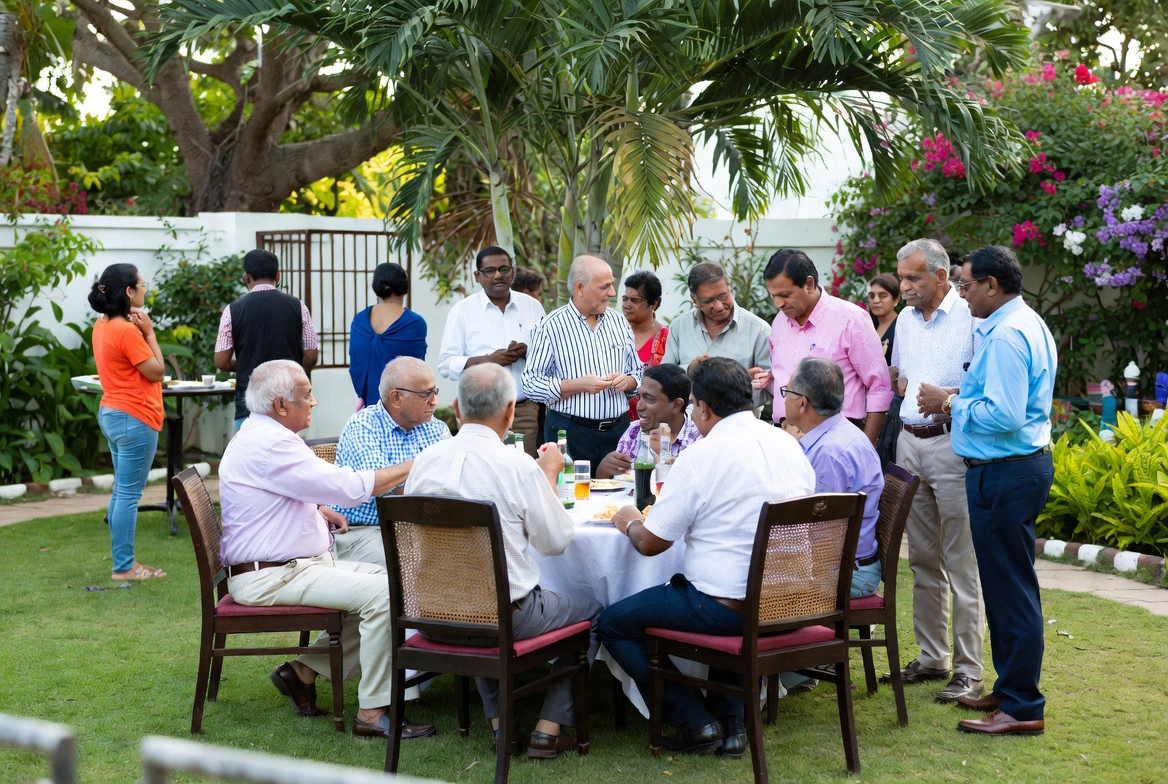
[Grok AI image for representation]
The central theme of United Nation’s 2030 agenda under the sustainable development goals is to “leave no one behind”. This implies that the state’s responsibility is to identify groups that are or can be vulnerable due to their socio-economic conditions or ‘minority status’.
In a country, celebrated for its diversity, it is often assumed that all communities are represented, acknowledged, and included in the narrative of the nation. Perhaps, this was the very principles on which the Constitutional Drafting committee based the foundational ideas of nation-building “recognizing the diversity of the peoples”.
Recognition thus, is not just symbolic—it becomes imperative. For the Anglo-Indian community, which was once constitutionally acknowledged and politically represented, the erasure had begun to take shape not just in the Parliament, but in the everyday mechanisms of state recognition. At the heart of this issue lies a crucial omission of Anglo-Indians in the consecutive Indian census. This error has led to the existential crisis that the community faces in terms of their identity.
Who are Anglo-Indians?
Anglo-Indians are a constitutionally defined community under the Article 366 (2) of the Indian Constitution. The term refers to persons whose father or any other male progenitor was of European descent, typically British, and who were born in India and have made it their permanent home.
The community arose during colonial rule as a consequence of mixed marriages between British and Indian. Anglo-Indians developed distinct features with mother tongue being English, having a religious affiliation to Christianity; celebrated a blend of Indian and Christian customs with strong institutional ties to Indian railways, education, and the armed forces.
Post-Independence, the Constitution recognized the uniqueness of the community by reserving nominated seats in the Lok Sabha and State Assemblies to ensure their political representation.
Erasing Heritage of Anglo-Indians
The representation of the community through the constitution came to an abrupt end with the 104th Constitutional Amendment Act (2020), brought in by the then Law Minister; citing a lack of “sufficient population”.
Ironically, that very justification stems from a deeper, unresolved issue: the Anglo-Indian community has never been properly counted in the Census.
Despite long-standing presence, the Anglo-Indian community faces the challenge of non-recognition, misrepresented and the edge of statistical blindness. As a consequence of this decision; Anglo-Indians face the crisis of contemporary erasure from political, statistical, and policy frameworks which has led to the invisibility and marginalization of the community.
Why Recognition in Census Matters?
Census informs policy direction for development – Conducting a census is the most essential and comprehensive mechanism for the state to gather information regarding socio-economic and demographic information of its citizens. The process aims to inform policy formulation and implementation (Education, health, employment and cultural preservation).
The contradictions remains that the Anglo-Indian community has never been listed as a distinct category in the census. Instead, they are ambiguously absorbed under generic religious groupings as “Christian,” hence I argue it becomes essential for the state machinery to recognize this unique community in the upcoming Census for ensuring their socio-political and cultural survival in contemporary times. Census recognition is a powerful act of national affirmation.
Debunking the ‘Population Too Small’ Argument
One of the main arguments used to justify the removal of political reservations for Anglo-Indians was that their population is too small. Yet, this reasoning is flawed at its core: no accurate population data exists. As there has never been national census taken that includes Anglo- Indians. And membership to the Anglo-Indian Association is also limited to those who have taken a membership. India prides itself on protecting micro-minorities.
Moreover, population size should not be the sole criterion for recognition. It is also important to remember that the visibility of a community is not only about its size, but its historical presence and cultural significance.
The Way Forward
First and foremost, the need is for census reform. The state must include “Anglo-Indian” as a distinct category under religion/community classifications in the upcoming Census schedule. This is significant for the following reasons.
- For Policy Planning: Data from the Census enables policymakers to assess socio-economic conditions—literacy rates, income levels, educational access. Without such data, Anglo-Indians are left out of India’s development agenda.
- Focused Community Engagement: The government should engage with Anglo-Indian associations, educational institutions, and church bodies to disseminate information and ensure accurate enumeration during the Census process.
- For Cultural Preservation: The Anglo-Indian identity is rich in music, cuisine, education, and hybrid cultural traditions. Recognition allows for cultural documentation, funding for community institutions, and inclusion in diversity policies at the state and national levels.
- Academic and Policy Advocacy: Scholars, journalists, and civil society organizations must research and document the community’s needs, struggles, and contributions, thereby creating an evidence base to push for reform.
For many Anglo-Indians, the question today is simple yet profound: Do we still belong?
In a time of resurgent nationalism, where cultural identities are being redefined and minority voices are increasingly sidelined, the Anglo-Indian community’s fear of being forgotten is not unfounded. But belonging is not merely a matter of identity—it is a matter of recognition. And recognition begins with being counted in. The Census is not just a survey—it is a social contract, a record of who matters to the nation.
If Anglo-Indians are to remain part of India’s story, they must be part of its statistics that informs policy formulation aimed at development of all and fulfilling the global development agenda. The community is asking for something more basic, more fundamental: the right to exist, officially and unambiguously, in the eyes of the state.
The right to be recognized, heard, and included. As India prepares for its next Census, it must seize this opportunity to act justly. By including Anglo-Indians as a distinct category, the state not only acknowledges their past contributions but also secures their future in the national imagination.
[Te writer, Dr Judith Anne Lal, is Assistant Professor, International Studies, Political Science, School of Social Sciences, Christ University. Connect him via Email – judith.anne@christuniversity.in.]
Follow ummid.com WhatsApp Channel for all the latest updates.
Select Language to Translate in Urdu, Hindi, Marathi or Arabic