Modi Govt's Push for Data Centres: At What Cost?
Data centres may power the digital economy, but their expansion must remain accountable to society and the environment
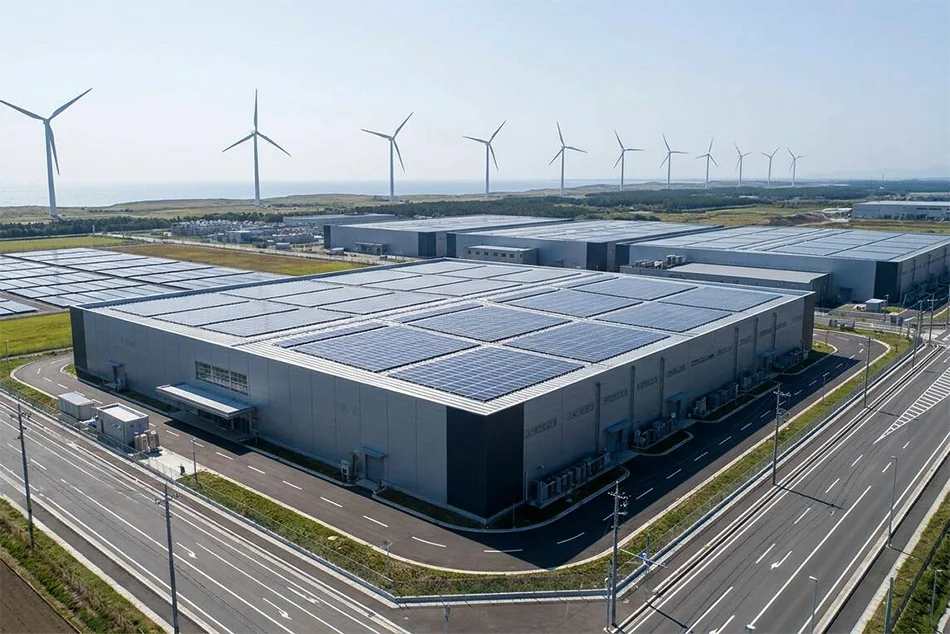
India is racing to establish itself as a global digital powerhouse. From digital payments and e-governance to artificial intelligence, cloud computing and e-commerce, the country’s growing dependence on technology has created enormous demand for infrastructure capable of storing, processing and managing vast quantities of data. At the centre of this transformation are data centres — a massive physical facilities that keep the seemingly invisible digital world running.
Governments increasingly call these facilities the backbone of the digital economy, encouraging expansion through tax incentives, land concessions and infrastructure support. Yet, is India examining the long-term costs and risks, or allowing the race for investment to take precedence over public interest?
The Union Budget 2026–27 has strengthened India’s ambition to become a global digital hub by announcing a 20-year tax holiday, until 2047, for eligible foreign companies providing global cloud services using data centres located in India. The incentive seeks to attract international investment. But when long-term tax benefits are offered to private corporations in the name of critical infrastructure, citizens have a right to ask what the country gains, what it gives away and who bears the costs.
The Invisible Infrastructure Powering the Digital Economy
Data centres are not simply rooms full of computers. They house thousands of servers, networking equipment, cooling systems and backup power units, operating around the clock with enormous electricity and connectivity requirements.
Digital payments, online transactions, cloud applications and AI services depend on data centres. As artificial intelligence spreads, training and operating large models require ever-greater computing capacity.
According to a February 2026 assessment by the Council on Energy, Environment and Water (CEEW):
- 1.5 GW: India’s installed data centre capacity by mid-2025
- Nearly 3 times: Growth compared to the 2020 capacity
- 4.5–6.5 GW: Projected capacity by 2030.
These figures highlight both the enormous growth potential and the mounting infrastructure challenges facing India’s digital economy.
A data centre is an energy-intensive industrial facility. Its operations can have far-reaching consequences for electricity distribution, water availability, land use and environmental sustainability. Calling it digital infrastructure should not obscure its physical footprint.
When Private Business Becomes Critical Infrastructure
Data centres support banking, digital payments, telecommunications, government databases, healthcare networks and other essential services. Major disruptions could affect millions and bring economic activity to a standstill. However, recognising their importance does not automatically justify treating every private project as a matter of national security or granting it extraordinary privileges without adequate scrutiny.
Critical infrastructure carries responsibilities beyond profitability: transparency, resilience, oversight and accountability. Governments must protect the public interest when private corporations operate facilities essential to public services. The language of national importance must not become a justification for incentives, relaxed regulations and accelerated approvals without scrutiny. Criticality should invite closer examination, not immunity from it.
The Race Among States: Investment at What Cost?
India’s data centre expansion is being driven by competition among states to attract domestic and international investors. Maharashtra, Telangana, Tamil Nadu and Karnataka have emerged as important destinations because of their connectivity, technology ecosystems, skilled workforce and access to commercial markets.
Maharashtra, particularly Mumbai and Navi Mumbai, enjoys advantages through its financial ecosystem, international connectivity and undersea cable landing infrastructure. Its IT and IT-enabled Services Policy 2023 provides data centres with infrastructure status, electricity-related concessions, stamp duty exemptions and other facilitation measures.
Telangana adopted a dedicated Data Centres Policy in 2016, offering subsidised land, rebates on building fees and incentives for smaller data centre enterprises, alongside support for research and development. States are moving beyond conventional industrial incentives to nurture data centres. But are they competing to attract sustainable infrastructure or simply offering increasingly attractive packages?
Tax concessions, subsidised land and electricity incentives carry a public cost. Their benefits must be measured: how many permanent jobs will facilities create, how much local activity will they generate, and will domestic firms and smaller businesses gain from the infrastructure? Data centres are capital-intensive but may create fewer jobs than traditional manufacturing. Investment announcements alone do not prove public benefit.
The Hidden Cost: Electricity, Water and Environment
The environmental footprint is among the least examined aspects of the data centre boom. The digital economy may appear virtual, but its infrastructure is not environmentally neutral. Data centres consume enormous amounts of electricity. AI facilities intensify demand through high-performance systems that generate heat and require sophisticated cooling.
Water consumption presents another major concern. According to CEEW’s 2026 assessment, Indian data centres consumed approximately 150 billion litres of water annually in 2025. This consumption, along with electricity requirements, is expected to more than double by 2030.
This is especially concerning in water-stressed regions, where communities may face drinking water shortages and groundwater depletion. If commercial facilities receive priority access to water and electricity, equitable resource distribution becomes unavoidable.
Companies must minimise pressure on local resources through efficient cooling, wastewater recycling, renewable energy and transparent environmental reporting. These should be requirements, not voluntary commitments.
Governments must assess the cumulative impact of facilities clustered in one region. Project-by-project reviews may miss combined pressure on power grids, water sources and ecosystems. Digital growth cannot come at the expense of environmental sustainability.
Data Sovereignty: Who Controls India’s Digital Future?
Data centres also raise questions about data sovereignty, privacy and national security. Governments, businesses and individuals generate enormous volumes of information, making data a valuable economic resource. Storing data in India can strengthen domestic infrastructure and jurisdiction, but physical location alone does not guarantee data sovereignty.
Ownership, server control, access rights, legal jurisdiction and service contracts matter too. A facility in India may be foreign-owned, serve customers worldwide and remain under the commercial and technological control of a few global companies.
India must distinguish data residency from meaningful control. Cybersecurity standards, independent audits, transparent ownership and clear legal obligations are essential. Investment policy should strengthen domestic capabilities, not create new dependence.
The 20-year Tax Holiday: Opportunity or Expensive Concession?
The Union Budget 2026–27 has taken the investment strategy further by proposing a tax holiday until 2047 for eligible foreign companies providing global cloud services using data centre infrastructure in India.
Under the proposed framework, qualifying foreign cloud service providers must use notified Indian data centres and route services to Indian customers through an Indian reseller entity. The Budget has also proposed a 15 per cent safe-harbour margin for qualifying related-party data centre service arrangements.
The rationale is understandable: data centres require heavy capital expenditure and policy stability. A long-term tax framework could attract global companies, strengthen connectivity, create skilled jobs and support AI and cloud computing.
Nevertheless, a tax holiday extending to 2047 is a substantial policy commitment. The question is whether the concessions are proportionate to the benefits expected.
Will investments create domestic jobs, benefit Indian companies and suppliers, and build expertise in designing, manufacturing and maintaining computing equipment?
Tax incentives should be tied to measurable investment, environmental and domestic-benefit commitments. Otherwise, India may host global infrastructure without capturing a fair share of its economic value.
The Regulatory Blind Spot
Fragmented policymaking is another concern. India needs a coherent national approach to the environmental, economic and strategic implications of data centres. A February 2026 CEEW assessment observed that only five of the 15 state policies examined explicitly incorporated sustainability provisions. It also identified gaps in water governance, energy efficiency benchmarks and climate resilience.
Because data centres are long-term investments, decisions on location, energy, cooling and land can shape regions for decades. Flooding, heatwaves, cyclones and water scarcity must inform project planning.
Regulation must examine actual energy and water use, emissions, backup power and cumulative impact, rather than relying only on building classifications. Clear, enforceable standards are essential to prevent inconsistent implementation and weak accountability.
Final Word – Growth Must Not Come at the Cost of Accountability
India needs world-class digital infrastructure to advance AI, cloud computing, fintech and digital governance. But not every investment is automatically a national achievement.
A responsible policy must establish what public benefit justifies incentives, how power and water needs will be managed, how communities will be protected, who is accountable for failures, and how gains will extend beyond large corporations.
Projects receiving major concessions need periodic public assessments distinguishing announced investment from operational capacity, promised jobs from actual employment, and renewable commitments from verified consumption.
The classification of data centres as critical infrastructure should raise the standard of accountability, not lower it. That requires transparent reporting, independent monitoring and meaningful public consultation before projects receive final approval.
India can become a global hub for cloud computing and AI, but leadership cannot be measured simply by facilities built, investment announced or multinationals attracted.
The real measure of digital progress is whether infrastructure strengthens national capabilities, protects citizens’ interests, conserves natural resources and creates lasting economic value.
Data centres may power the digital economy, but their expansion must remain accountable to society and the environment. The cloud may be invisible; its costs are real. India must not let the language of critical infrastructure become a shield against scrutiny.
[The writer, Mohd Ziyauallah Khan, is a freelance content writer & editor based in Nagpur. He is also an activist and social entrepreneur, co-founder of the group TruthScape, a team of digital activists fighting disinformation on social media.]
Follow ummid.com WhatsApp Channel for all the latest updates.
Select Language to Translate in Urdu, Hindi, Marathi or Arabic