Corporal Punishment: Its Harmful Effects and Constructive Alternatives
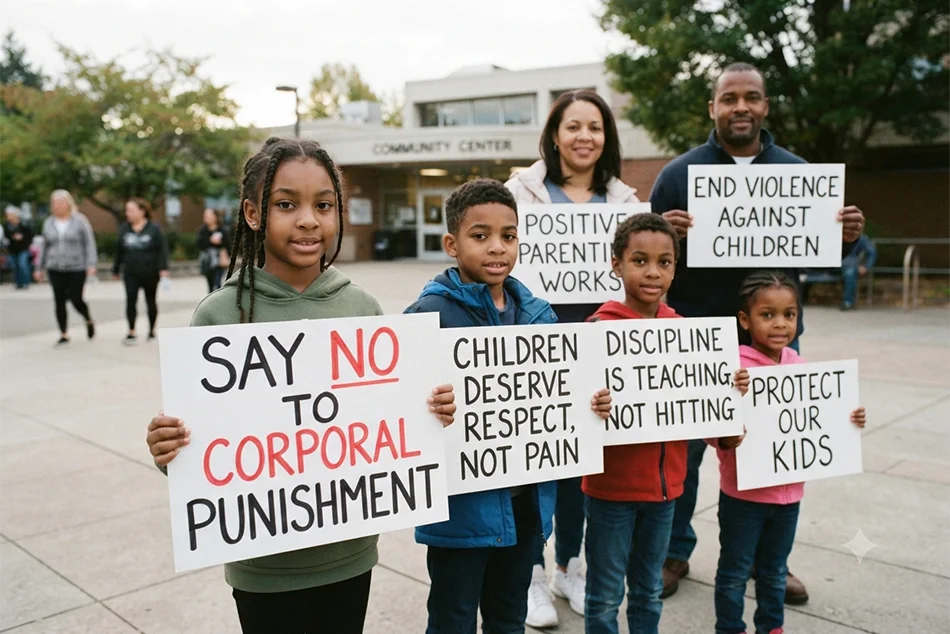
Corporal punishment refers to the deliberate infliction of physical pain on a child as a means of maintaining discipline, correcting misconduct or enforcing obedience.
Introduction
The education and upbringing of children constitute a highly important and demanding responsibility. The objective is not merely to help them memorise lessons or impart information, but to nurture their intellectual, moral, mental and psychological development and shape them into balanced, virtuous and upright individuals. Parents, teachers and mentors play a fundamental role in achieving this objective, as their conduct and methods of upbringing have a lasting impact on a child's personality.
However, in some cases, unnecessary harshness, scolding and corporal punishment are employed in the name of discipline and correction. Such practices are sometimes regarded as an essential part of a child's upbringing. Yet, instead of bringing about positive change, excessive harshness can instil fear and inferiority complexes in children and encourage negative traits such as lying, deceit and manipulation.
It is, therefore, essential to adopt methods that take into account children's age, psychological development and the true objectives of education and upbringing — the methods that help to shape and refine their personalities rather than damage or distort them.
Meaning of Corporal Punishment and its Prohibition
Corporal punishment refers to the deliberate infliction of physical pain on a child as a means of maintaining discipline, correcting misconduct or enforcing obedience. It includes acts such as beating, slapping, caning or striking a child with any other object. In many countries around the world, corporal punishment has been prohibited in educational institutions to protect children from physical and psychological harm and to promote a peaceful learning environment.
According to modern educational approaches, children's behaviour should be corrected through love, wisdom, patience and positive guidance rather than physical punishment. This is because corporal punishment can instil fear, feelings of inferiority, stubbornness, resentment and a desire for revenge in children. It can also affect their intellectual, moral and academic development. Therefore, teachers and mentors should adopt effective, respectful and constructive methods of discipline instead of resorting to violence.
Ibn Khaldun's Guidance
The renowned historian, thinker and sociologist, Ibn Khaldun (1332–1406), declared, several centuries ago, that undue harshness towards children and students was detrimental to their education and upbringing. In his celebrated work, Al-Muqaddimah, he discussed the numerous psychological, moral and practical harms resulting from such treatment. In the fortieth chapter, he writes:
“The reason is that excessive severity in the process of instruction is harmful to the learner, particularly to young children, as it is a form of poor upbringing. Anyone who is brought up under harshness and oppression, whether a student, a slave or a servant, becomes dominated by oppression. It constricts the natural expansiveness of the soul, deprives it of vitality and enthusiasm, and inclines the individual towards laziness.
"It also leads to lying and dishonesty, as the person begins to conceal what is in his heart and outwardly presents himself in a manner contrary to his true feelings, for fear of being subjected to further oppression and punishment. This, in turn, teaches him cunning and deceit, which eventually become ingrained habits and traits of character. Consequently, the qualities that constitute his humanity and enable him to live and interact constructively within society become corrupted, including courage, self-defence and the willingness to protect himself and his household.” (Al-Muqaddimah by Ibn Khaldun, Vol. 1, p. 743, Darul-Fikr, Beirut)
Some Major Harmful Effects of Excessive Harshness
In light of the aforementioned statement by Ibn Khaldun (may Allah have mercy on him), some of the major harmful effects of treating children and students with undue harshness are outlined below:
- Loss of Self-Confidence and Freedom of Expression: Self-confidence is a fundamental characteristic of a well-balanced personality. It enables an individual to express thoughts, ask questions and acknowledge mistakes. However, when a child is repeatedly scolded, punished for even minor mistakes and denied the opportunity to express himself, his self-confidence gradually begins to erode. He becomes reluctant to ask questions, share his opinions or seek clarification, and may eventually develop fear and feelings of inferiority. In contrast, an environment that encourages children to express their thoughts, ask questions and learn from their mistakes helps nurture their self-confidence. In such an atmosphere, children are more likely to develop their abilities and make use of their potential with confidence.
- Laziness and Loss of Interest in Educational Activities: One of the primary objectives of education is to cultivate a love of knowledge, curiosity and a genuine desire to learn in children. However, when education becomes associated with harshness, physical punishment and fear, children gradually begin to develop resentment and disinterest towards learning rather than a love for knowledge. They start perceiving studies and other educational activities as a burden, and their creative abilities may also suffer. Instead of studying out of a genuine thirst for knowledge, they do so merely to avoid their teacher's scolding and punishment. Thus, education, rather than remaining an enjoyable and rewarding experience, turns into a source of fear and pressure, adversely affecting a child's academic performance and intellectual development.
- Developing a Habit of Lying, Hypocrisy and Concealing the Truth: Instilling truthfulness and honesty in children is of fundamental importance in their upbringing. However, when a child faces severe punishment and humiliation instead of correction and guidance for admitting a mistake, he begins to conceal his faults. Fear of punishment and embarrassment may drive him to lie, make excuses and deny the truth. Gradually, he may develop the mindset that telling the truth leads to trouble, whereas concealing it offers a way of escape. At times, he may outwardly appear obedient to his teacher while inwardly refusing to accept what he says. In this way, an excessively harsh approach to discipline, rather than fostering honesty and moral responsibility, ends up promoting dishonesty and hypocrisy in children.
- A Tendency Towards Deception and Cunning: A child who grows up in an environment of constant harshness and punishment gradually begins to devise various tricks and excuses to avoid being punished. He tries to conceal his mistakes, shift the blame onto others and manipulate circumstances to his own advantage. If this behaviour continues, it may gradually become an ingrained habit. Rather than accepting responsibility for his mistakes, he begins to regard cunning and deception as effective ways of dealing with problems. Consequently, moral qualities such as honesty, integrity and a sense of responsibility begin to deteriorate. By contrast, when a child is assured of correction and guidance rather than humiliation upon admitting a mistake, he develops the courage to speak the truth and accept responsibility for his actions.
- Weakening of Self-Respect, Courage and the Ability to Defend Oneself: Self-respect, dignity, courage and an awareness of one's legitimate rights are fundamental qualities of human personality. However, these qualities may gradually weaken in a child who grows up in an environment of constant oppression and undue harshness. Such a child may become accustomed to submitting to those in positions of power, tolerating injustice and avoiding self-defence. He may even lose the courage to speak out against injustice inflicted upon others, having come to regard silence as the safest course of action. In contrast, a nurturing and balanced approach to upbringing fosters self-respect, truthfulness, courage and a sense of responsibility towards protecting the rights of others. It enables a child to grow into an individual who neither wrongs others nor silently accepts injustice when it is done to him.
An Argument by Some Teachers in Support of Punishment
Some teachers argue that the Prophet Muhammad (Sallallahu Aleihi Wa Sallam) instructed that children should be physically disciplined at the age of ten if they failed to offer their prayers. They therefore maintain that teachers are also permitted to punish students for their mistakes or failure to memorise their lessons. In this regard, The Prophet (SAWS) is reported to have said:
“When your children reach the age of seven, instruct them to offer Salah (prayer) and when they reach the age of ten, discipline them physically for failing to offer it and separate their sleeping beds.” (Sunan Abi Dawood, Hadith: 495)
A Response to the Teachers' Argument
The aforementioned Hadith is authentic and Muslim jurists have also, in light of it, allowed a teacher a degree of discretion to administer appropriate reprimands or limited physical punishment for the purpose of correcting a student's behaviour. This is because such permission is implicitly understood to have been granted by the parents. However, circumstances have changed in the present age.
Most parents do not approve of teachers physically punishing their children. Furthermore, Muslim jurists have laid down several conditions and limitations governing the administration of punishment, which must be strictly observed. Yet, many teachers fail to take these conditions into consideration when disciplining their students.
Moreover, the governments of many countries have prohibited corporal punishment in educational institutions. Teachers must therefore comply with the laws of their respective countries and the regulations of their institutions and refrain from administering physical punishment. Students' misconduct should instead be addressed through appropriate measures in accordance with the institution's Disciplinary Code, taking into account the nature and seriousness of each offence.
Where no such code exists, if a student fails to memorise a lesson, remains absent or engages in disruptive behaviour, the teacher should refer the matter to the higher authorities rather than taking disciplinary action into his own hands. This will enable the matter to be dealt with appropriately and the student's behaviour to be corrected through proper channels. Our objective should be to find solutions to problems, not to create new ones.
Effective Methods of Correction Instead of Corporal Punishment
Opposing corporal punishment does not mean leaving children entirely unchecked, turning a blind eye to their mistakes or disregarding discipline. Rather, the objective is to correct their behaviour through methods that do not undermine their self-respect. In this regard, the following points deserve particular attention:
- Parents and teachers should treat children with such love, kindness and compassion that children regard them as well-wishers rather than as figures associated with fear and punishment. When a child makes a mistake, it is better to explain the mistake and its consequences with gentleness and wisdom rather than responding with anger and punishment.
- Children should be encouraged and appreciated for developing good habits, displaying positive behaviour and achieving academic success. If a child repeatedly makes the same mistake, non-physical disciplinary measures should be adopted according to the child's age, intellectual capacity and individual circumstances. These may include a verbal warning, temporary withdrawal of a privilege or a favourite activity or assigning an appropriate corrective responsibility.
- Furthermore, parents and teachers should set a practical example through their own conduct by demonstrating good character, discipline, honesty, patience and a sense of responsibility. This is because children learn a great deal not only from the advice they receive; but also from observing the behaviour and actions of adults around them.
Conclusion
Gentleness, compassion, love and wisdom are fundamental principles of successful education and upbringing. The responsibility of parents, teachers and mentors is not merely to point out children's mistakes, but to correct them in a manner that refines their personalities, strengthens their self-confidence and nurtures their enthusiasm for knowledge and good deeds.
This does not mean that children should be given complete freedom or that their mistakes should be overlooked. Rather, correction and discipline must be exercised with moderation, wisdom and due regard for the circumstances and appropriateness of each situation. Where gentleness is effective, harshness should be avoided. Where a warning or reprimand is necessary, it should be administered without humiliation or violence.
Children are a trust placed in our care and a valuable asset for the future. The way we treat them has a profound impact on their personalities and the course of their future lives. Therefore, our efforts should be directed towards nurturing confident, principled, honest and responsible individuals rather than producing children who are intimidated and fearful.
Successful upbringing does not mean making a child afraid of committing a mistake in the presence of a teacher. Rather, it means instilling in the child the wisdom and courage to distinguish between right and wrong and to follow the right path even in the teacher's absence. Remember! The true excellence of upbringing lies not in silencing a child through fear, but in teaching the child to follow the right path through understanding and awareness.
[The writer, Khursheed Alam Dawood Qasmi, is associated with Moon Rays Trust School, Zambia.]
Follow ummid.com WhatsApp Channel for all the latest updates.
Select Language to Translate in Urdu, Hindi, Marathi or Arabic