2026 WB Polls: When Votes Spoke Louder Than Words
In Amit Shah's assertion about the government's policy of 'detect, delete and deport', the 'deport' element generated fear among Muslims and appears to have motivated higher participation in the 2026 West Bengal Assembly elections.
An existential crisis, triggered by deep questioning of identity, purpose, and relevance in life, often leads a person to retaliate. Muslims have been facing the threat of such a crisis ever since Narendra Modi became Prime Minister. The implementation of SIR (Special Intensive Revision of electoral rolls) has exposed the communal imagery and the deeply troubling nature of this crisis. Allegations of humiliation and disenfranchisement of Muslims through this process are widespread in West Bengal, Bihar, and Uttar Pradesh.
It is also a well-established fact that SIR is being used as a tool to selectively remove Muslim names from voter lists. In West Bengal, an estimated 91 lakh names were deleted, with studies suggesting a disproportionately high rate of deletion and “logical discrepancies” in Muslim-majority areas. What has come as a shock is the non-committal approach of the judiciary. Testimonies from public hearings highlight instances where Muslims were harassed during the verification process and forced to attend multiple hearings despite possessing valid documents such as Aadhaar and voter IDs. The judiciary did not find any flaw in the Election Commission of India (ECI) dismissing claims of communal bias as “politically motivated,” asserting that the process is a standard constitutional exercise to refine electoral rolls by removing deceased or duplicate entries. While officials present SIR as a means to stop “infiltrators,” its framing suggests it is being used to target Muslims and create two classes of political participation.
Instead of foregrounding the denial of their voting rights — which could eventually lead to denial of nationality and citizenship, Muslims have largely maintained silence. Rather than pursuing a Shaheen Bagh–style Gandhian protest, they chose to participate in the assembly elections to exercise their democratic rights. Reports indicate that approximately 34% of the over 90 lakh voters deleted from electoral rolls are Muslims. While Muslims constitute about 27% of West Bengal’s population (2011 Census), their share among deleted voters (34%) is disproportionately high. Around 63% of the deleted voters are Hindus (approx. 57.47 lakh), and 34% are Muslims (approx. 31.1 lakh).
In constituencies like Nandigram, where BJP leader Shuvendu Adhikari is contesting, reports indicate that up to 95.5% of deleted voters were Muslim, despite the community making up only about 25% of the area’s population. Of the 27.16 lakh names removed during the final adjudication phase due to “logical discrepancies” (such as translation issues with Urdu/Arabic names), about 17 lakh are estimated to be Muslims. The clarification by Chief Election Commissioner Gyanesh Kumar — that deletions were part of a routine “clean-up”, does not fully address concerns. The process appears to have disproportionately affected minority and border communities.
In Nandigram, analysis of 13 supplementary lists showed that out of 2,902 deletions under this category, 2,757 were Muslims. Ultimately, 3,461 voters were removed from the constituency. These figures suggest that the SIR process lacked transparency and may have been used with the intent to disenfranchise Muslims. Rahul Gandhi alleged in Parliament that SIR is part of a broader project of “vote chori” (vote theft) aimed at undermining the integrity of India’s democratic elections.
Responding to this, Amit Shah stated that the BJP was protecting democracy through a policy of “detect, delete and deport.” The “deport” element has generated fear among Muslims and appears to have motivated higher participation in the Bengal Assembly elections to counter what is perceived as a coordinated effort to undermine their identity and reduce them to second-class citizens. While SIR is officially a voter verification exercise, it is widely seen as a form of “citizenship determination by the back door.”
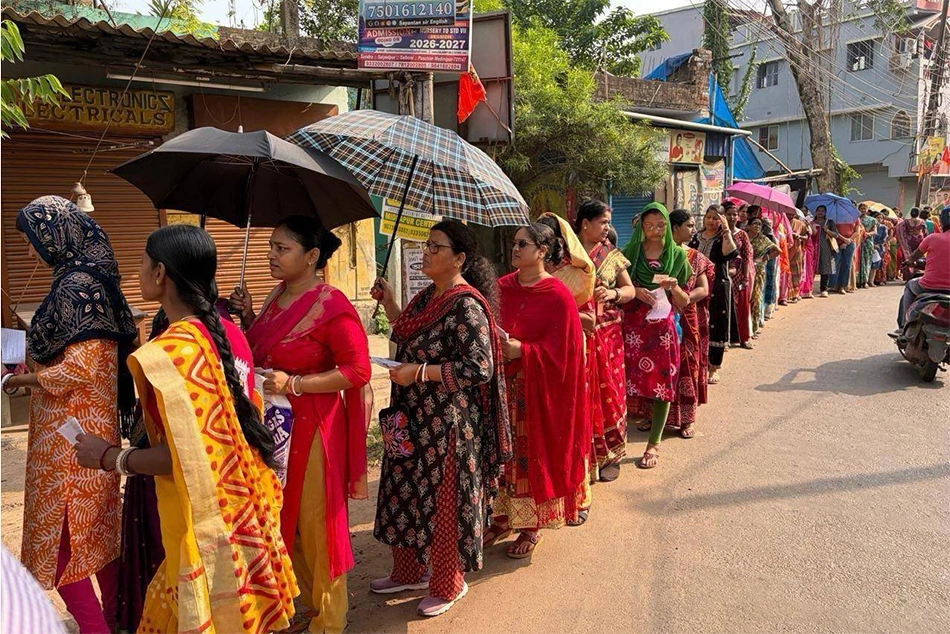
Muslims are not unaware of these developments. Their electoral response reflects emotional distress — despair, helplessness, and anxiety, channeled into democratic participation. While existential anxiety can sometimes lead to aggression or withdrawal, in this case it has led to large-scale voter turnout as an assertion of the right to exist.
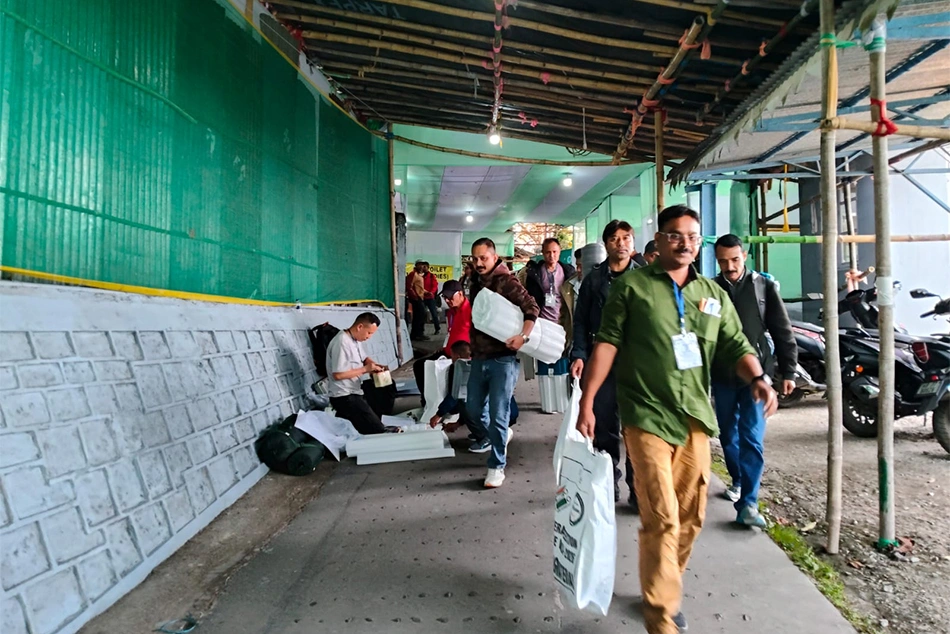
In the first phase of the West Bengal Assembly polls on April 23, 152 constituencies across 16 districts voted. In 54 of these, the Muslim population is significant. Several constituencies saw sharp increases in turnout compared to 2021. Raghunathganj in Murshidabad rose from 76.4% to 96.9%, Jangipur from 77.8% to 95.7%, Goalpokhar from 71.9% to 91.7%, and both Sagardighi and Samserganj crossed 95%.
Murshidabad and Malda — districts with high SIR-related deletions, also recorded strong turnout. Murshidabad saw 4,55,137 deletions and Malda 2,39,375, yet voting in many constituencies exceeded 90%. This suggests a determined electoral response, possibly influenced by calls to support those whose names were removed from voter lists.
Modi described the high turnout as a signal of “regime change,” but this interpretation appears inaccurate. The surge in Muslim turnout can also be seen as a response to perceived discrimination and marginalisation. Reports indicate that Muslims increasingly feel their belonging to the nation is questioned and their rights curtailed. Political rhetoric referring to them as “infiltrators” has deepened this sense of exclusion.
SIR previously triggered backlash and legal challenges in Bihar, where more than 6.5 million people were removed from voter lists. Although the Election Commission attributed this to deaths or migration, many affected individuals were found to be alive, resulting in widespread complaints. A significant number of those removed belonged to Muslim and other non-BJP-supporting communities. West Bengal has seen even greater controversy around SIR.
Analysis of the RSS ideology suggests a strategic focus on assimilating Muslims into a dominant Hindu identity, alongside concern about the economic rise of a Muslim middle class. The growth of such a class is perceived as a challenge to the Hindu middle class, a core support base of the RSS and BJP. Policies under the current administration are seen as contributing to economic marginalisation, while promoting “Indianisation” aligned with Hindutva cultural norms.
Recent RSS outreach to Pasmanda (backward-caste) Muslims is viewed as an attempt to reshape internal power dynamics within the Muslim community, potentially weakening traditional leadership structures. At the same time, there is recognition that complete alienation of Muslims could be counterproductive, leading to a complex mix of outreach and ideological assertion. The long-standing emphasis remains on integrating Muslims into a cultural framework defined as “Bharatiya,” often overlapping with Hindu traditions.
[The writer, Arun Srivastava, is a Senior Journalist.]
Follow ummid.com WhatsApp Channel for all the latest updates.
Select Language to Translate in Urdu, Hindi, Marathi or Arabic