From Khan Sir to Faisal Khan: Demonisation of The People's Teacher
This transformation of a professional controversy into a communal issue reveals a troubling trend in India’s digital discourse, where disagreements often descend into identity-based attacks.
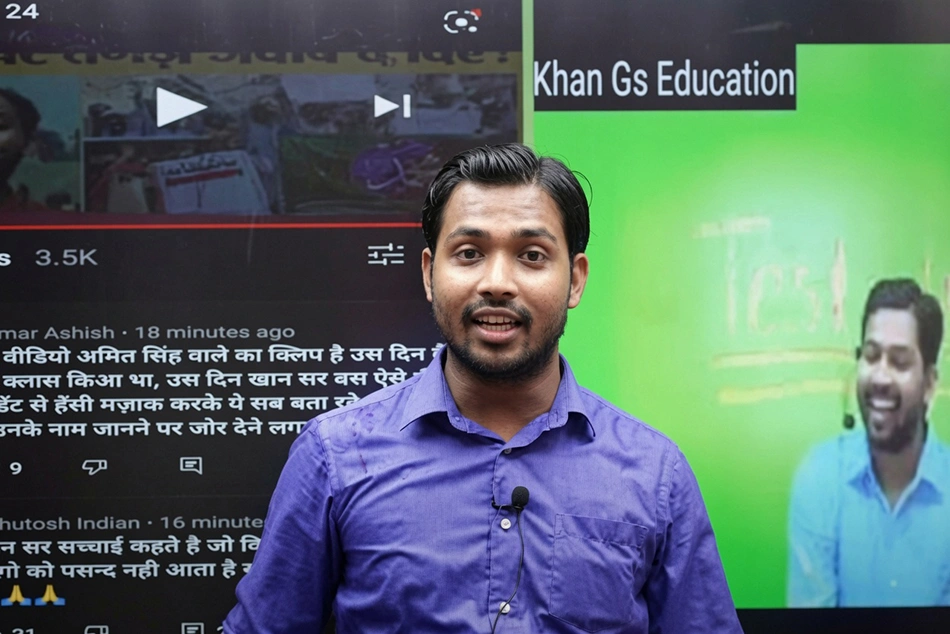
For millions of students across India, especially those from modest backgrounds, Khan Sir has been more than just a teacher. Through his affordable coaching classes and easy-to-understand teaching style, he has become a symbol of hope for countless aspirants preparing for competitive examinations.
For years, he was celebrated as a people’s teacher — a man who democratized education and made quality coaching accessible to students who could never afford expensive institutions. But today, the same man finds himself at the centre of controversies, legal battles, and a vicious media campaign.
The question is:
What changed?
In this article, we will be looking as to what made the man of inspiration to many as a controversial figure.
The Turning Point: Asking Uncomfortable Questions
The perception around Khan Sir began to shift when he started raising serious questions about recurring paper leaks and the repeated failures of examination authorities.
At a time when millions of students were protesting against irregularities in competitive examinations, Khan Sir emerged as one of the few influential voices openly challenging the system. He questioned why paper leaks had become a recurring phenomenon and why agencies responsible for conducting examinations were failing to ensure fairness and transparency.
His criticism resonated with students who felt betrayed by a system that repeatedly crushed their dreams. However, taking on powerful systems often comes with consequences. Today when Khan sir is standing against all odd not many from his old friend circle is standing with him. In a sense, he is now all alone facing the music from the robust system, which is leaving no stone unturned to thrash him down.
The Patna Coaching Wars
The recent controversy surrounding Khan Sir cannot be understood without looking at the highly competitive and often cut-throat coaching industry in Patna.
His institute, Khan Global Studies, became embroiled in a violent clash involving vandalism and even reports of gunfire outside its premises. Police registered an FIR with serious charges, including provisions under the Arms Act and attempt to murder.
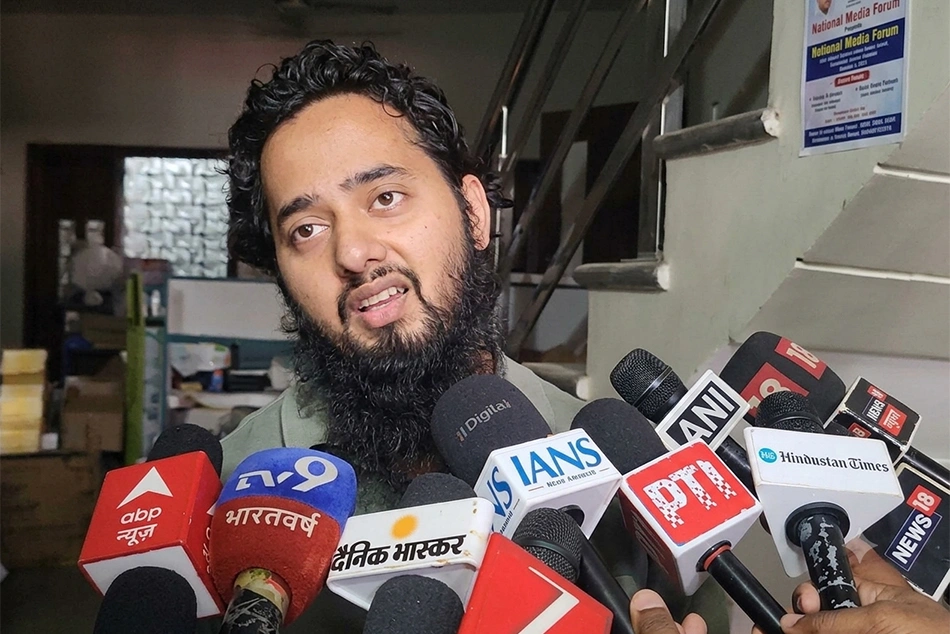
Following these developments, several media outlets suddenly stopped referring to him by his popular name, “Khan Sir,” and instead began using his legal name, "Faisal Khan".
Critics argue that this shift was not merely journalistic practice but contributed to changing the narrative around him and creating sensational headlines.
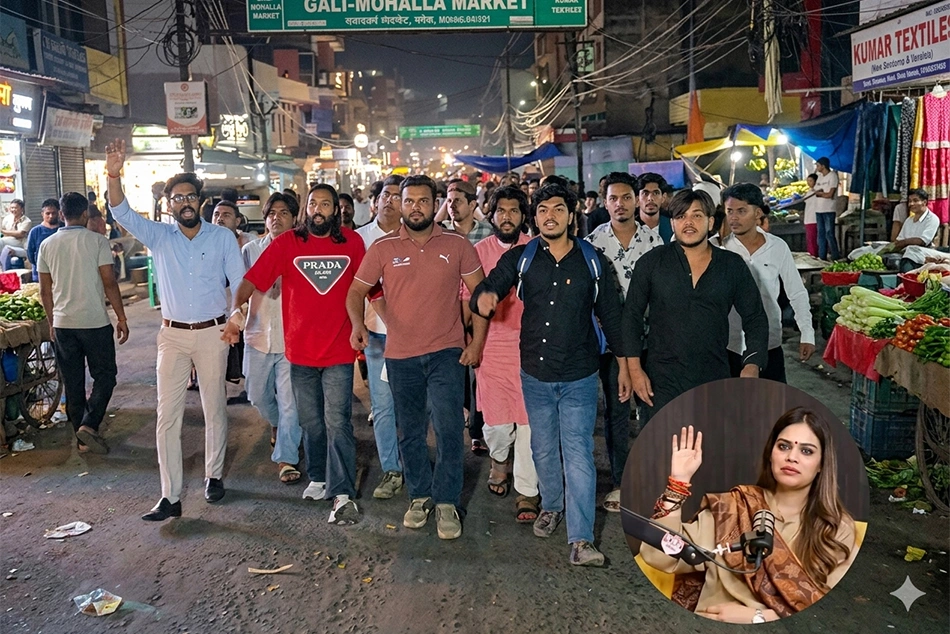
The attack on the office of Khan Global Studies by rival coaching groups like Gyan Bindu GS Academy, associated with Raushan Anand, has further intensified the perception that the controversy is not merely legal but also linked to fierce competition within the coaching industry.
A Battle with the Media
Another reason for Khan Sir’s negative portrayal has been his public confrontation with mainstream journalists.
He openly criticized sections of the media for what he considered biased reporting on examination scams and student protests. The dispute soon escalated into public exchanges and legal notices, creating an adversarial relationship between him and several news networks.
As a result, media scrutiny of his activities and business practices intensified, with critics and supporters engaging in a bitter war of narratives.
Social Media’s Ugly Turn: From Criticism to Communal Targeting
In the age of social media, controversies rarely remain confined to facts.
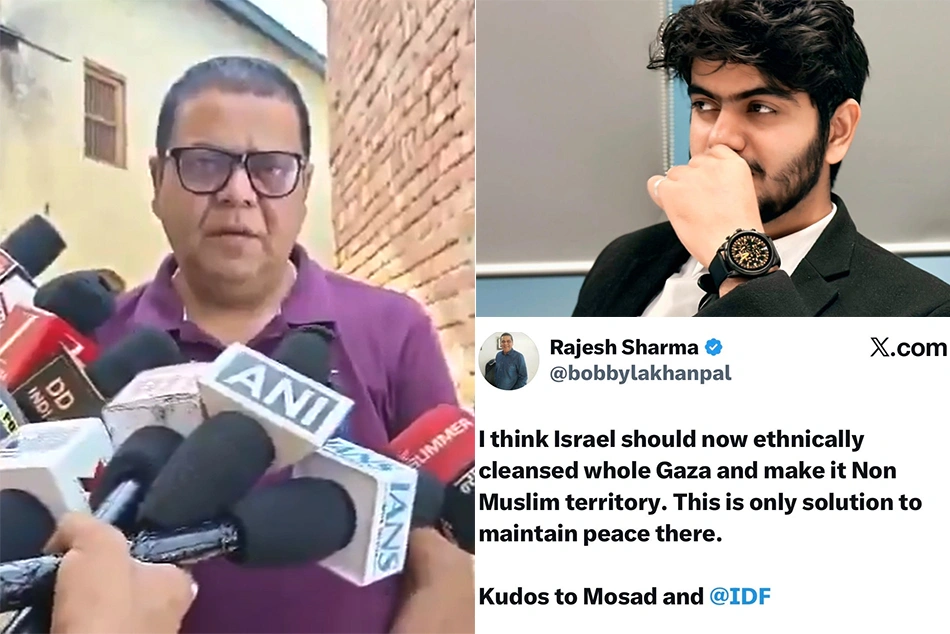
As legal troubles and media scrutiny grew, certain sections of the internet began weaponizing Khan Sir’s identity. His official name, Faisal Khan, became a tool for communal trolling and abusive campaigns.
The criticism increasingly shifted from his actions and statements to his religious identity. This transformation of a professional controversy into a communal issue reveals a troubling trend in India’s digital discourse, where disagreements often descend into identity-based attacks.
One cannot ignore the uncomfortable question: Would the reaction have been the same if the person at the centre of the controversy belonged to a different community?
How BJP is playing a Hindu-Muslim Card in this issue?
The controversy surrounding Khan Sir has now taken a disturbing communal turn. The latest development came when his rival, Raushan Anand, alleged that Khan Sir had some connection to the death of his brother, Prince Yadav, who was found dead in a hotel in Nepal. While these allegations remain unproven and the matter is still under investigation, the nature of the accusations has raised serious concerns.
What particularly caught public attention was Anand’s repeated emphasis on his identity as a “Sanatani Hindu” while making the allegations. Critics argue that invoking religious identity in a dispute that is essentially personal or professional serves no purpose other than to polarise public opinion and frame the issue in Hindu-Muslim terms.
Several political observers claim that this development reflects the BJP’s well-known politics of polarisation, where controversies are often given a communal angle to influence public discourse. They argue that by shifting the focus towards religious identities, attention is diverted from the original issues such as the coaching industry’s rivalries, paper leaks, and institutional failures in conducting fair examinations. The growing communalisation of the Khan Sir controversy, they warn, risks deepening social divisions and obscuring the real questions that deserve answers.
Criticism beyond Politics
At the same time, Khan Sir is not without critics for reasons unrelated to the current controversy.
Over the years, some of his comments on women’s clothing and traditional attire have been criticized as regressive and hypocritical. Several online platforms, including Reddit, have debated his views and questioned certain aspects of his social commentary.
Public figures, particularly those with enormous influence, must remain open to criticism. However, legitimate criticism of opinions should not become an excuse for character assassination or communal vilification.
The Students Still Stand With Him
Despite the intense backlash, one fact remains undeniable: Khan Sir continues to enjoy massive support among students.
For his supporters, the media campaign against him appears less like objective journalism and more like an orchestrated attempt to discredit a teacher who dared to question a broken examination system.
Many students believe that his real “crime” was amplifying their frustrations and demanding accountability from institutions that have repeatedly failed them.
The Bigger Question – The Final Thought
The controversy surrounding Khan Sir is about much more than one individual.
It raises larger questions about the state of public discourse in India. Why are whistle-blowers and critics of systemic failures often subjected to relentless scrutiny? Why do debates quickly become communal? Why are individuals who challenge powerful institutions suddenly portrayed differently?
A democracy needs voices that ask uncomfortable questions. Institutions become stronger, not weaker, when they are held accountable.
Khan Sir may have his flaws, and like every public figure, he deserves fair criticism. But if questioning paper leaks, demanding transparency, and standing with students are enough to transform a national teacher into a public villain, then perhaps the real issue lies not with the man, but with a system increasingly uncomfortable with dissent.
If the BJP is indeed attempting to give the controversy a communal colour, it only serves to distract from the real issue. Khan Sir has raised some uncomfortable and important questions about paper leaks, examination irregularities, and the failure of institutions responsible for conducting fair exams.
So, instead of addressing these concerns and ensuring accountability, the government appears more interested in allowing the debate to be diverted into a Hindu-Muslim narrative. Such a shift not only dilutes the core issues at stake but also prevents meaningful discussions on the systemic failures that have affected millions of students across the country.
[The writer, Mohd Ziyauallah Khan, is a freelance content writer & editor based in Nagpur. He is also an activist and social entrepreneur, cofounder of the group TruthScape, a team of digital activists fighting disinformation on social media.]
Follow ummid.com WhatsApp Channel for all the latest updates.
Select Language to Translate in Urdu, Hindi, Marathi or Arabic