SpaceX rocket debris crashes on Moon
NASA and SpaceX are tracking Falcon 9 debris that crashed on Moon early in the morning Wednesday August 05, 2026
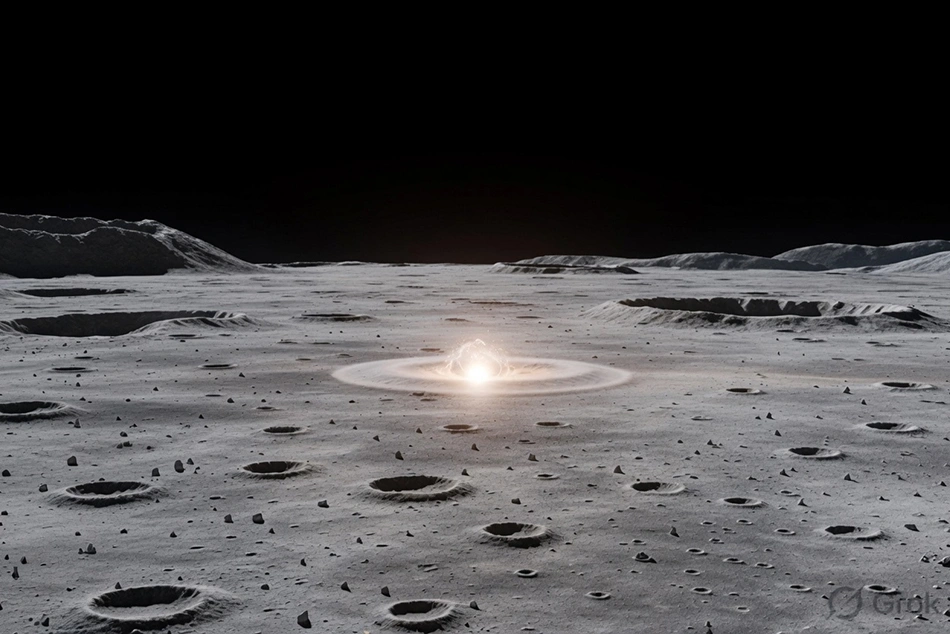
NASA and SpaceX are tracking Falcon 9 debris that crashed on Moon early in the morning Wednesday August 05, 2026.
SpaceX had launched Falcon 9 rocket on January 15, 2025 and successfully deployed Firefly Aerospace’s Blue Ghost 1 lunar lander to the Moon under NASA’s CLPS (Commercial Lunar Payload Services) initiative.
However, the four-tonne chunk of the Falcon 9 debris the size of a school bus struck the Moon early Wednesday near the Einstein Crater, at approximately 8,700 kilometres per hour (5,400 miles per hour), according to orbital trajectories mapped by independent astronomers and confirmed by space-tracking agencies.
The SpaceX Falcon 9 debris struck the lunar surface with the force of roughly three tonnes of TNT.
The American space agency, NASA, confirmed the impact, saying, “Because the Moon has no atmosphere to slow incoming objects, it is struck by meteoroids daily. Human made object impacts are far less common but do occur. The rocket stage is expected to create a crater about 60 feet wide and 12 feet deep and throw dust and rock outward as ejecta.”
“The impact will not be visible to the naked eye on Earth, but NASA will attempt to observe it in real time”, the space agency said.
“Unintentional, but unpreventable”
In its first response to the crash, SpaceX said the trajectory leading to the crash was unintentional but unpreventable, given the vehicle’s remaining fuel reserves.
“What has happened is essentially a mixture of solar activity and gravity forces have put it on a path toward the moon,” Julianna Scheiman, SpaceX Director of NASA Science and Dragon Programmes, told reporters.
NASA meanwhile said that it's Lunar Reconnaissance Orbiter and the ShadowCam instrument aboard South Korea’s Korea Pathfinder Lunar Orbiter will try to explore if images of the site before and after the crash are available.
"Image availability will depend on lighting, orbital timing, and spacecraft position, and it may take several days to receive imagery", NASA said.
Today’s collision marks only the second known instance of discarded rocket space debris accidentally crashing into the Moon. The first such crash had occurred on March 4, 2022, when it was claimed that part of a Chinese Long March 3C rocket launched in 2014 impacted the lunar far side, carving out an unusual double crater. China had rejected these claims.
Follow ummid.com WhatsApp Channel for all the latest updates.
Select Language to Translate in Urdu, Hindi, Marathi or Arabic