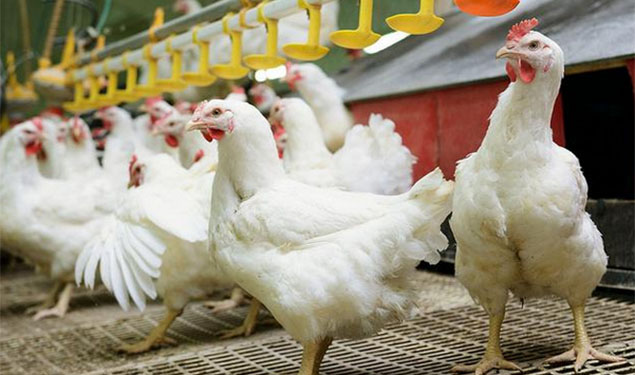
Mumbai: Chickens raised in India for food have been dosed with some of the strongest antibiotics -"antibiotic of last resort"- that could have repercussions throughout the world, a study by the Bureau of Investigative Journalism has found.
The antibiotics 'colistin' only used in the most extreme cases of sickness - are shipped to India each year to be used, without medical supervision.
The Bureau of Investigative Journalism study said that hundreds of tonnes of colistin, described as an antibiotic of last resort, have been shipped to India for the routine treatment of animals, mainly chickens, on farms.
"The medicines are antibiotics, given to the birds to protect them against diseases or to make them gain weight faster so more can be grown each year at greater profit. One drug typically given this way is colistin. Doctors call it the “last hope” antibiotic because it is used to treat patients who are critically ill with infections which have become resistant to nearly all other drugs.
"The World Health Organisation has called for the use of such antibiotics, which it calls “critically important to human medicine”, to be restricted in animals and banned as growth promoters. Their continued use in farming increases the chance bacteria will develop resistance to them, leaving them useless when treating patients", the study said.
"At least five animal pharmaceutical companies are openly advertising products containing colistin as growth promoters in India.
"One of these companies, Venky’s, is also a major poultry producer. Apart from selling animal medicines and creating its own chicken meals, it also supplies meat directly and indirectly to fast food chains in India such as KFC, McDonald’s, Pizza Hut and Dominos", the study said.
Timothy Walsh, a global expert on antibiotic resistance, called the Bureau’s findings about the ready availability of colistin in India “deeply worrying” and described the use of colistin in poultry farming as “complete and utter madness”.
Walsh, who is Professor of Medical Microbiology at Cardiff University, and his Chinese colleagues discovered a colistin-resistant gene in Chinese pigs in 2015. The gene, mcr-1, could be transferred within and between species of bacteria. That meant that microbes did not have to develop resistance themselves, they could become resistant just by acquiring the mcr-1 gene.
The discovery was met with worldwide panic in the medical community as it meant the resistance could be passed to bugs which are already multi-drug resistant, leading to untreatable infections. Rampant use of the drug in livestock farming has been cited as the most likely way mcr-1 was spread.
It has been detected in bacteria from animals and humans in more than 30 countries, spanning four continents. Another four colistin resistant genes (mcr-2 to mcr-5) have been discovered since. Colistin-resistant bacteria, once rare, are now widespread.
“Colistin is the last line of defence”, said Professor Walsh, who is also an adviser to the UN on antimicrobial resistance. “It is the only drug we have left to treat critically ill patients with a carbapenem-resistant infection. Giving it to chickens as feed is crazy.”
“Colistin-resistant bacteria will spread on the chicken farms, in the air surrounding them, contaminate the meat, spread to the farm workers, and through their faeces flies will spread it over large distances”, he continued.
He added: “Colistin should only be used on very sick patients. Under any other circumstances it should be thought of and treated as an environmental toxin. It should be labelled as such. It should not be exported all over the world to be used in chicken feed.”
Professor Dame Sally Davies, England’s chief medical officer, also called for a worldwide ban on the use of not just colistin but all antibiotics as growth promoters. “If we have not banned growth promotion within five years we will have failed the global community”, she told the Bureau.
For all the latest Health News, download ummid.com App
Select Langauge To Read in Urdu, Hindi, Marathi or Arabic
 Post Comments


 | Quick links