Ibrahim Traore Must Remember — Africa’s Problem are Weak Institutions, Not Democracy
Burkina Faso or Africa’s challenge, therefore, is not to reject democracy in favour of ill-defined alternatives, but to undertake the harder task of making it work
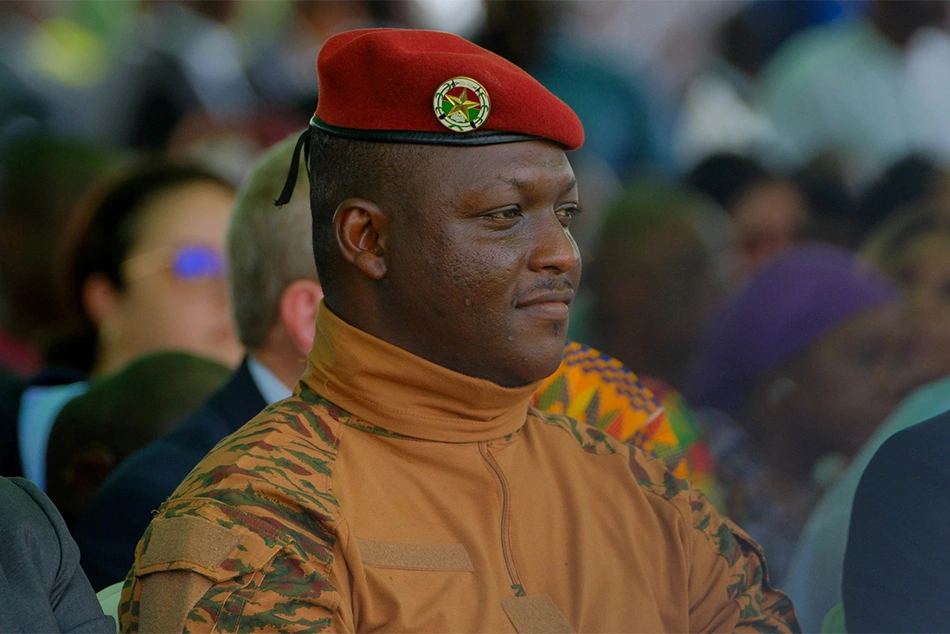
On the 2nd of April, 2026 when Ibrahim Traoré dismissed democracy as unnecessary for Burkina Faso, he gave a blunt expression to a now-fashionable claim: that liberal democracy is not merely underperforming but fundamentally unsuited to non-Western conditions — African conditions in particular. The appeal of this argument is not difficult to understand. It draws its force from lived frustration with elections that rotate elites without transforming governance, rising youth unemployment despite decades of reform, and states that struggle to guarantee even minimal security outside capital cities.
Yet what gives the claim its persuasive edge is not only the perceived failure of democratic systems, but the absence of equally rigorous scrutiny of what replaces them. Once the question is framed not as “is democracy failing?” but “what has demonstrably worked better?”, the confidence of this anti-democratic argument begins to crumble under empirical pressure.
Across Africa, the data on governance outcomes reveals a more complicated picture than the rhetoric of failure suggests. According to Freedom House scores and the Economist Intelligence Unit’s Democracy Index, the continent is overwhelmingly characterised not by robust democracies or stable authoritarianisms, but by hybrid regimes that combine electoral processes with weak institutional constraints. Only a handful of countries consistently rank as free or full democracies, while a larger number fall into categories such as partly free or authoritarian. This distribution is significant because it suggests that Africa’s problem is not an excess of democracy but its incomplete institutionalisation. Where democratic norms exist without enforcement, outcomes appear chaotic and inconsistent. Where enforcement exists without accountability, outcomes tend toward coercion.
What the Evidence Actually Shows
Nowhere is the cost of weak institutionalisation clearer than in long-running crisis zones. The Democratic Republic of the Congo, despite vast mineral wealth estimated in the trillions of dollars, has seen GDP per capita remain among the lowest globally, with conflict-related mortality in the millions. Sudan has experienced repeated cycles of military takeover and civil war, with devastating human consequences in its latest conflagration.
In Tigray, the war under Abiy Ahmed led to large-scale civilian casualties and economic contraction in what had previously been one of Africa’s fastest-growing regions. Somalia, after three decades of state collapse, continues to rank at the bottom of most governance and development indicators. These are not failures produced by too much democracy but by the absence of stable, accountable state structures.
If one turns to the historical record of explicitly non-democratic regimes, the pattern becomes even starker. The regime of Idi Amin in the 1970s saw GDP contract sharply, foreign investment collapse, and an estimated 300,000 people killed. Under Omar al-Bashir, Sudan endured both prolonged economic mismanagement and mass violence in Darfur that resulted in hundreds of thousands of deaths and millions displaced. The Rwandan genocide, which resulted in approximately 800,000 deaths in a matter of months, was not the product of excessive democratic pluralism but of its breakdown in a context where institutional safeguards had collapsed. Across these cases, the removal of constraints on power did not produce efficiency or order; it produced volatility, repression, and, in extreme cases, systematic mass violence.
It is true that not all non-democratic systems collapse so dramatically, and variation matters. Morocco has maintained relative macroeconomic stability, with steady growth and infrastructure investment, yet this stability coexists with unresolved political tensions, particularly in Western Sahara. Tunisia, once a democratic success story after 2011, has reversed course, with power consolidating in the presidency. Egypt returned to military-led governance after a brief democratic opening, while Algeria continues in a state of controlled political stagnation. Even high-performing states such as Rwanda, which has sustained strong growth and reduced poverty, do so under tightly managed political systems that limit opposition and media freedom. These cases demonstrate that stability without accountability is possible, but often conditional—dependent on sustained economic performance and vulnerable to disruption.
What Actually Works — and Why
The most instructive comparisons, however, come from within Africa’s more successful democracies. Ghana has recorded steady growth alongside multiple peaceful transfers of power since the return to constitutional rule in 1992, while Botswana has transformed itself from one of the poorest countries at independence into an upper-middle-income economy through prudent resource management and consistent institutional stability. Both cases demonstrate that democratic governance, when paired with sound economic policy and institutional continuity, can produce sustained improvements in living standards. Their success is not rooted in rejecting liberal democratic principles, but in gradually embedding them.
It is often argued that such successes are products of uniquely African traditions rather than liberal democracy itself. These traditions are real and historically grounded. Systems such as the Yoruba councils under the authority of the Ooni, the Asante political system centred around the Asantehene, and various forms of village assemblies and elder councils across East and West Africa embodied consultative practices and mechanisms of accountability rooted in social norms. Philosophical ideas such as ubuntu emphasised interdependence and shared humanity.
However, these systems operated within relatively small, culturally cohesive communities. Modern African states are large, diverse, and administratively complex. The mechanisms that sustained traditional governance—shared norms, social sanction, and limited scale—do not easily translate into bureaucratic systems managing tens of millions of citizens. These traditions can complement liberal democratic institutions by deepening participation and legitimacy, but they cannot replace formal, impersonal structures that constrain power across large populations.
A brief look at Kenya illustrates this tension clearly. Kenya has sustained multiparty elections and steady economic growth, yet its democratic trajectory has been punctuated by moments of acute crisis. The 2007–08 Kenyan post-election violence exposed how quickly electoral competition can turn violent when institutions are mistrusted and ethnic polarisation deepens. Subsequent reforms, including constitutional change and devolution, have strengthened aspects of governance, but underlying tensions between participation and delivery remain unresolved. Democracy here is not absent, but incomplete—and constantly tested.
The Real Question for Africa
Ibrahim Traoré’s Burkina Faso is a contemporary case in point. He is not rejecting democracy because his government has rediscovered some lost model rooted in precolonial African traditions. Years after seizing power, his regime has delivered little in terms of economic transformation or in containing jihadist violence, despite invoking both as justification for restricting freedom. What it has delivered efficiently is the curtailment of basic liberties. Faced with scrutiny, democracy becomes “incompatible” with African realities. The pattern is familiar—and convenient.
In fact, the claim that democracy is “Western” ultimately obscures more than it reveals. It shifts attention away from outcomes and toward origins, as if the provenance of an idea determined its validity. Yet the real issue is not where democracy comes from, but what it does: whether it provides mechanisms for limiting power, protecting citizens, and enabling course correction when systems fail.
Also Read: Ibrahim Traore: Generating Contours Of A New Pan-African Identity
From the perspective of John Rawls and his thought experiment of the veil of ignorance, the stakes become immediate and personal. If one were to choose a political system without knowledge of one’s future position—gender, ethnicity, religion, or economic status—the logic is compelling. Most Africans would imagine themselves not as rulers, but as ordinary citizens, often vulnerable to arbitrary authority. From that position, systems in which power is personalised and unaccountable are inherently unattractive. Liberal democratic institutions, however imperfect, provide protections, avenues of redress, and the possibility of peaceful change that reduce the risk of exploitation.
Africa’s challenge, therefore, is not to reject democracy in favour of ill-defined alternatives, but to undertake the harder task of making it work. This requires strengthening institutions, improving state capacity, addressing corruption, and grounding governance in both economic reality and social legitimacy. It also requires recognising that while all political systems fail, they do not fail equally. Systems without democratic accountability tend to fail catastrophically or persistently. Systems with accountability fail more visibly, but retain the essential capacity for self-correction. Traditional African practices, in this light, are not substitutes but enhancers: they can deepen legitimacy and ethical grounding, while liberal democratic institutions provide the enforceable constraints necessary to protect citizens from arbitrary power.
[The writer, Sahasranshu Dash, is a research associate at the International Centre for Applied Ethics and Public Affairs (ICAEPA), an independent research organisation based in Sheffield, the United Kingdom.]
Follow ummid.com WhatsApp Channel for all the latest updates.
Select Language to Translate in Urdu, Hindi, Marathi or Arabic