Now, Palestinians in Gaza found their bank accounts frozen, inaccessible
Bank of Palestine account holders in Gaza, including employees, traders, lawyers, exchange shop owners and ordinary citizens, report that both their bank accounts and electronic payment apps were frozen simultaneously without explanation
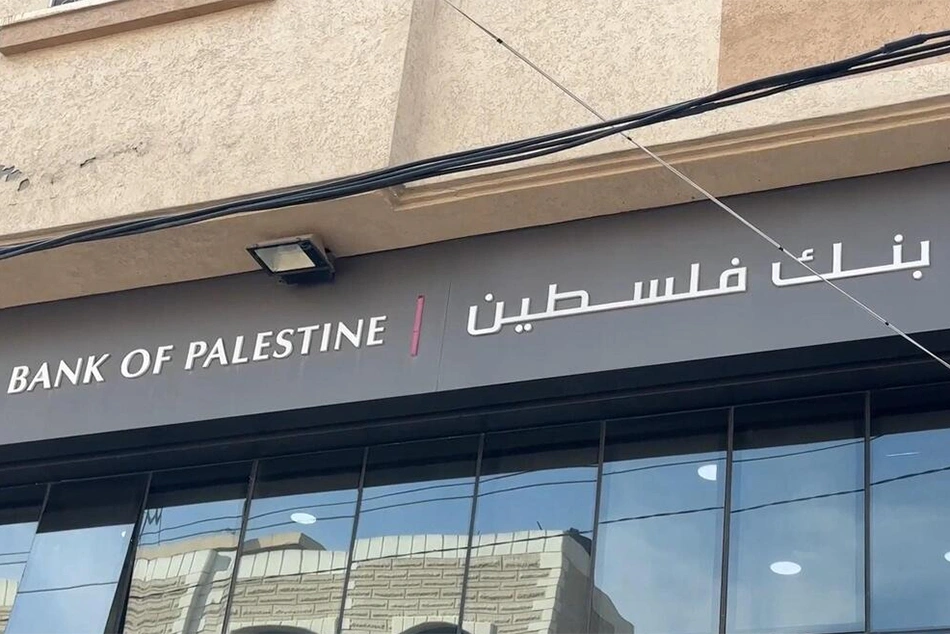
Gaza (Palestine): Thousands of Palestinians in Gaza have had their bank accounts frozen and closed without notice by the Bank of Palestine, the largest Palestinian financial institution, cutting off access to funds amid an ongoing Israeli genocide and blockade that has destroyed the Strip’s banking infrastructure.
Bank account holders, including employees, traders, lawyers, exchange shop owners and ordinary citizens, report that both their bank accounts and electronic payment apps were frozen simultaneously without explanation.
The Bank of Palestine, with assets exceeding $250 million and annual profits surpassing $100 million, has provided only vague references to “administrative procedures” when questioned about the closures.
Activist and writer Ahmad Sirdah reported that his bank account was frozen without warning. In a social media post, Sirdah stated that 500 to 1,000 accounts were frozen without prior notice or request for updated information, with account holders told their accounts are “under administrative hold” and must wait for an undefined period. He contradicted a bank official’s false explanation given to a journalist investigating the suspensions, which claimed accounts were frozen for exceeding transfer limits.
Hisham Al-Bana, a Palestinian lawyer from Gaza, described attempting to access the bank’s Nusseirat branch to address his frozen account, facing the same lack of transparency and explanation from bank staff.
Ramy Abdu, Founder and Chair of the Euro-Mediterranean Human Rights Monitor, disclosed in a social media statement that the account freezes follow directives from a joint security cell operating with the Israelis. He highlighted the case of Dr. Husam Abu Safiya, the renowned Gaza paediatrician and director of Kamal Adwan Hospital, who was kidnapped by Israeli occupation forces on December 27, 2024 after he refused to abandon his patients during the siege of northern Gaza. Dr. Abu Safiya currently remains detained without charge. His bank account, along with those of his wife and son, were frozen by the Bank of Palestine without any consideration for his service to patients and his country.
Mossab Madoukh, director of the Noor Al-Wafa team for freed prisoners and their families, confirmed that the Bank of Palestine continues to freeze accounts belonging to freed prisoners, martyrs’ families and other affected groups despite widespread public anger and protests in Gaza. Some accounts that were unfrozen following public demonstrations were subsequently reclosed. The bank has refused to respond to demands from account holders or listen to repeated appeals for relief.
"Account Freezing is Crime"
The mass freezing compounds an already catastrophic humanitarian and economic crisis. Palestinians in Gaza have become almost entirely dependent on electronic banking and payment applications to manage daily finances due to a severe cash shortage. The freezing of both bank accounts and digital wallets simultaneously has paralyzed citizens’ purchasing power and their ability to meet basic needs for their families. When account holders visit bank branches seeking explanations, they encounter total refusals from staff to disclose reasons for the holds, creating widespread anxiety about the fate of Palestinian savings and financial rights.
Social media campaigns have emerged under hashtags including #AccountFreezingIsCrime and #TransparencyIsARight, demanding that the Bank of Palestine and the Palestinian Monetary Authority issue immediate official statements explaining the real reasons behind the account freezes and protecting Palestinian funds in a sector with no alternative financial options.
The account freezing campaign affects a broad population: salaried workers, businesspeople, lawyers, money changers and ordinary Palestinians living in severe humanitarian conditions. Many report that the freezing prevented them from receiving international transfers or managing savings securely. In an environment where international aid and personal remittances are increasingly vital, access to bank accounts has become a survival necessity rather than an administrative convenience.
The Bank of Palestine has refused to respond to official inquiries from journalists about the reasons for the mass suspension of Gaza residents’ accounts.
Israel’s destruction of Gaza’s financial infrastructure since October 7, 2023 has devastated the banking sector. Israeli occupation forces have destroyed approximately 95 percent of Gaza’s banking infrastructure, including all branch offices and ATM systems. This destruction has forced Palestinians to rely almost entirely on electronic payments for all transactions. However, Israel’s restrictions on cash entering Gaza have created an immense burden on the population, which has suffered two years of genocidal warfare.
The Bank of Palestine has emerged as an active participant in enforcing a financial stranglehold on Gaza, at a moment when Israeli far-right Finance Minister Bezalel Smotrich has openly called for blocking funds to Palestinian banks and preventing financial system renewal in the Strip. Far-right Israeli pressure on Palestinian financial institutions constitutes part of a broader financial war aimed at strangling any prospect of a Palestinian state.
Economist Ahmad Abu Qimr told journalists that “opening bank branches in Gaza without providing actual cash withdrawal and deposit services changes nothing about the crisis. Opening doors without liquidity leaves accounts frozen and forces people to turn to black markets and pay exorbitant commissions to obtain cash.”
He emphasized that “banking operations have no meaning without cash injections that allow normal transactions without losses. Liquidity is the lifeblood of economic life, guarantees continued commercial activity and wage payments.”
International reports have estimated the cost of financial reconstruction at approximately $42 million, yet without immediate steps to control black market currency exchanges and ensure cash reaches bank branches and exchange shops, the banking collapse will continue.
Follow ummid.com WhatsApp Channel for all the latest updates.
Select Language to Translate in Urdu, Hindi, Marathi or Arabic