Indian Gen Z are on move, albeit Cockroach Janta Party
What India witnessed in the last few days, Gen Z dug through documents, cross-checked data, exposed inconsistencies, challenged official claims and worked with a determination that put many professionals to shame.
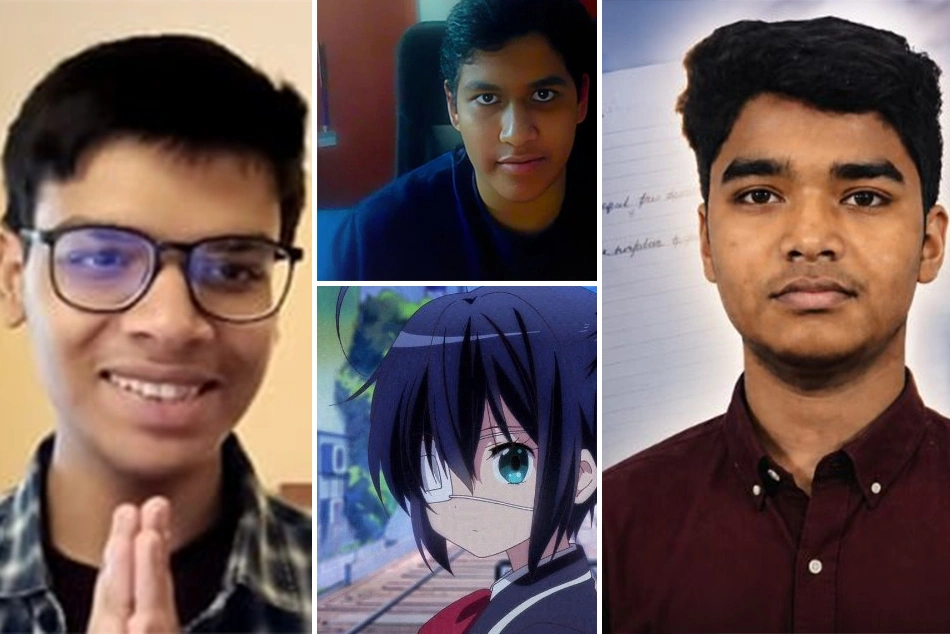
[It is Sarthak Sidhant who exposed the Coempt Edu Teck. Nisarga Adhikary, who revealed the systemic flaws and security vulnerabilities in the CBSE OSM portal, and Vedant’s doggedness in finding his sheet brought forth the skeletons in the CBSE board.]
A strange new creature has appeared on India’s political scene.
Thanks to the Chief Justice’s notorious “cockroach” remark, a fledgling movement has been born: CJP.
Will it last? Who knows. But that’s not the point.
Beneath this apparently spontaneous eruption lies something real. Public anger has been building for years. Disgust with governance. Disillusionment. A slow, simmering pressure.
The promise was Achhe Din. Twelve years on, millions are still waiting. A long walk in search of a mirage.
What people got instead was a publicity machine. A relentless one. Funded by their own money. The narrative of prosperity was loud and everywhere. The prosperity itself? Much harder to find. Sirf Jumla!
This isn’t nostalgia for the Congress era. Those weren’t achhe din either. But from day one, the BJP proved that swapping one ruling party for another doesn’t transform governance. Tweedledum gave way to Tweedledee.
There is, however, one crucial difference.
Many parties have played the religion card. Few have pursued the project of building a Hindu Rashtra with such clarity and ideological commitment. That remains the BJP’s defining mission. Poisonously sinister mission. Hindu majoritarian fascism on the rise. So the Tweedledum is the worse option.
Look around South Asia. Sri Lanka imploded. Bangladesh erupted. Nepal lurched from crisis to crisis. Violently. In more than one case, Gen Z was at the front of it all. Young people organised. Investigated. Documented. Challenged power. They refused inherited narratives.
So. Is India next?
The BJP is formidable. At least apparently. It has crushed the Maoist movement. It has reduced the main opposition party, the Congress, to a shadow. The opposition remains fragmented. Internal dissent within the BJP is almost invisible. Even with the RSS, Modi-Shah have often appeared to hold the upper hand.
However, appearances are deceptive. Opposites are hiding beneath the Chinese wall of achhe din.
Can a government arrest growing sentiments? Erupting dissent? Can it detain a generation?
The toolkit is already visible. Social media restrictions. IT cells. Narrative management. Godi media, the offspring of the crony capitalists, is trying to malign the rising new phenomenon.
And yet. India’s digitally native generation seems less willing to play along.
The irony is delicious.
No political force has courted young voters more aggressively than the BJP and the RSS. Yet many young people increasingly feel betrayed by the very forces that once sought their loyalty.
The Agniveer Scheme became a symbol of that rupture. It was the extension of contractualisation even into the armed forces, once considered one of the state’s most stable institutions.
Education tells a similar story.
Vyapam shocked the nation. Before public memory could absorb it, NEET controversies arrived. Then more exam leaks. More irregularities. Ministers carried on as though nothing had happened.
Business ran as usual.
But there comes a point when scandals stop looking like accidents. They start looking like a pattern.
Even the judiciary – once a distinct moral institution in the public imagination – now faces questions about its independence. Institutional boundaries feel increasingly blurred to many citizens.
That’s why even a trivial controversy can suddenly carry real political weight.
The Chief Justice’s “cockroach” comment has caused headaches far beyond the courtroom. And if any movement arising from public anger grows assertive enough, the labels will follow. “Urban Naxal” would be among the milder ones.
One can already write the script. Vivek Agnihotri can jump in.
Conspiracies. Foreign hands. Internal enemies. Hidden networks. Perhaps a blockbuster film explaining how cockroaches plotted against India.
Satire can’t be shut up anymore.
Also Read: Cockroach Janta Party Manifesto: Glaring Silence on Fundamental Issues
Meanwhile, some of the most remarkable accountability journalism isn’t coming from newsrooms. It’s coming from students. It is not that the cabinet ministers who are sought for interviews. It is Sarthak Sidhant who exposed the Coempt Edu Teck. Nisarga Adhikary, who revealed the systemic flaws and security vulnerabilities in the CBSE OSM portal, and Vedant’s doggedness in finding his sheet brought forth the skeletons in the CBSE board.
Gen Z dug through documents. Cross-checked data. Exposed inconsistencies. Challenged official claims. They worked with a determination that put many professionals to shame.
Their confidence is striking.
They’re less intimidated by authority. Less dependent on traditional gatekeepers. Less impressed by prime-time anchors.
This generational shift may prove more consequential than any single election.
Despite the BJP’s electoral dominance, a different conversation is happening beneath the surface.
The spectre of Gen Z will haunt the BJP in the coming days.
In India, economic anxiety persists. Job creation remains the central unanswered question. Inequality has widened. Even sections of the ‘right’ are uneasy about the economy’s direction. Manufacturing, despite high-decibel propaganda acts, miserably fails to catch up. Even the domestic business is reluctant to invest in the country.
Winning elections and winning economic confidence are not coterminous.
Some say that Modi’s days are numbered. Rahul looked too hurried when he said: Modi has only one year.
Political scientist Christophe Jaffrelot has observed that the RSS may eventually push for a change of leadership if circumstances demand it. He thinks 2029 may not be Modi’s year. Whether he’s right matters less than what the observation reveals. Succession talk- once unthinkable -has entered political conversation. The ripples might gather into a storm as the faltering economy reaches a brink.
India is churning.
Its economy is unsettled. Its institutions are under scrutiny. Its political alignments are shifting. Its youth are restless. The social contract is being renegotiated in real time.
Often, history does not announce its turning points in advance. They only become visible in hindsight.
Gen Z has not created the churn. The churn already exists.
Being is pushing for the possible actions.
What Gen Z may do is provide the spark. The energy. The impatience that accelerates everything.
Muslims raised their voices against CAA and NRC. Farmers fought formidable battles against the farm laws. Workers- From Baruani to Panipat, Manesar to Noida are fighting for their rights in the Labour Codes era. Adivasis in Dantewada or in Kandhamal are again on the path of the struggle.
And, now the Youth.
A generation that grew up online, questions authority by instinct, investigates claims independently, and refuses to wait its turn – that generation could yet become the catalyst of India’s next political chapter.
Where that chapter leads – renewal, confrontation, reform, something entirely unforeseen – nobody knows.
But one thing is becoming harder to ignore.
The youth are no longer just watching.
They’re on the move. The move must be firm, and in the correct direction.
[The writer, V Subrahmanyam, is Advocate based in Guntur, Andhra Pradesh.]
Follow ummid.com WhatsApp Channel for all the latest updates.
Select Language to Translate in Urdu, Hindi, Marathi or Arabic