PM Modi's Foreign Visits: The Deeper Story
PM Modi’s travels have become a permanent feature of India’s political theatre. Yet, to dismiss them as spectacle alone would be to miss the deeper story unfolding beneath the surface
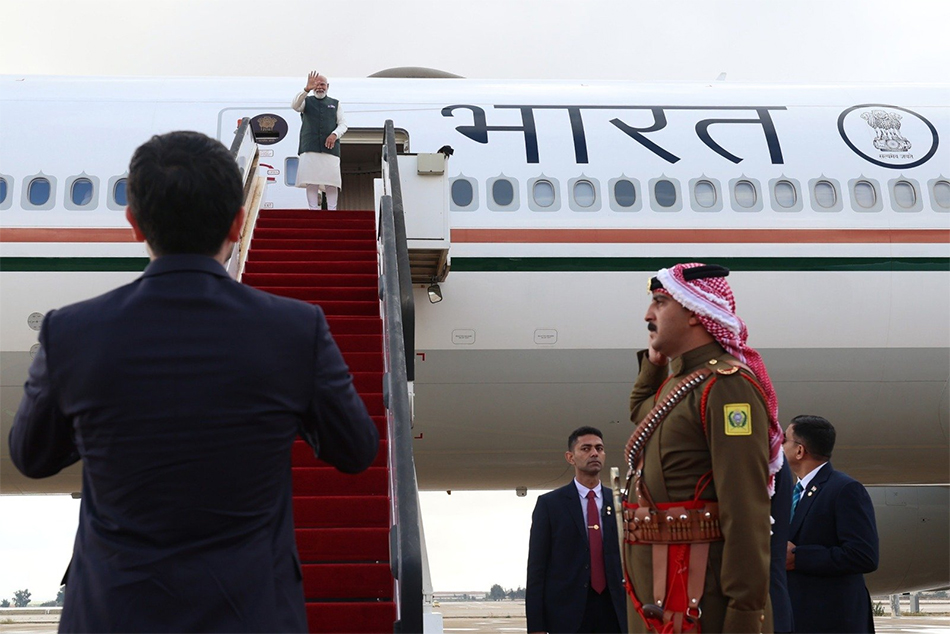
The images are familiar now. The Prime Minister steps off aircraft stairways into carefully arranged warmth — handshakes, embraces, ceremonial guards, diaspora applause.
Narendra Modi’s travels have become a permanent feature of India’s political theatre, so frequent that they are rarely questioned except for their cost.
Yet, to dismiss them as spectacle alone would be to miss the deeper story unfolding beneath the surface.
These journeys are not about grandeur. They are about uncertainty.
India is travelling the world at a time when the world itself is coming apart at the seams. The liberal order that once promised stability has fractured. The West is inward-looking and divided. Multilateral institutions are paralysed. Wars rage without resolution, and moral language has lost its authority.
In this unsettled landscape, Modi’s diplomacy reflects a state acutely aware that standing still is not an option — and that moral clarity, once prized, has become diplomatically inconvenient.
At its core, this is a diplomacy of avoidance and positioning, not leadership in the classical sense. India is not attempting to remake the world. It is trying to ensure it is not marginalised by it.
Consider the geography of Modi’s recent travels. West Asia, Africa, smaller strategic states, emerging economies, old civilisational partners rather than great powers alone.
These are not glamorous destinations, but they sit along fault lines — energy routes, shipping corridors, labour markets, geopolitical chokepoints. Jordan, Oman, Ethiopia, Gulf states, African partners. These countries matter not for what they are today, but for where future alignments may pass through.
This is hedging diplomacy. India is spreading its presence widely because it does not know where influence will coagulate next.
There is also a notable shift in language. Democracy, human rights, pluralism — once the soft power vocabulary of Indian diplomacy, have receded.
In their place are words like stability, counter-terrorism, development, technology, food security, energy cooperation.
This is not accidental. India has recognised what many states now quietly accept. Moral lectures carry little value in a world where power operates without shame.
This allows India to engage authoritarian regimes without discomfort and Western democracies without obligation.
It enables flexibility.
It also signals a conscious retreat from normative leadership.
India is choosing relevance over righteousness.
Yet beneath this pragmatism lies anxiety. India senses that it stands at an awkward crossroads — too large to be ignored, yet not powerful enough to dictate terms.
China looms as a permanent comparator, economically and strategically.
The United States remains indispensable but unpredictable.
Europe is economically useful but politically cautious.
Russia is sanctioned yet unavoidable.
In this maze, Modi’s travels are about keeping doors open, even when corridors are narrowing.
There is a domestic layer as well — subtle, but significant.
Also Read: PM Modi's Foreign Visits: Miles Without Milestone
Foreign policy has become a psychological stabiliser for a restless polity. As institutions weaken at home, as inequality deepens, as dissent shrinks, global recognition becomes compensatory.
Applause abroad substitutes for unease within. The image of India as a rising global actor helps suspend uncomfortable conversations about democratic erosion, social fragmentation, and economic precarity.
This does not mean the diplomacy is hollow. On the contrary, it is often transactional and effective. Trade agreements inch forward. Energy security is diversified. Defence cooperation expands. Technology partnerships grow.
India’s seat at multiple tables — BRICS, G20, Quad, Global South forums, is not accidental. It is the result of persistent networking.
But transactional diplomacy has limits.
When foreign policy becomes entirely interest-driven, stripped of ethical anchors, it gains agility but loses memory. States may work with you, but they do not trust you.
Presence replaces purpose.
Engagement substitutes for vision.
Over time, this erodes the deeper credibility that cannot be manufactured through summits or slogans.
India today is everywhere — but stands cautiously silent on almost everything that demands moral courage.
Gaza burns, international law collapses, authoritarianism expands, and India speaks the language of balance rather than justice.
This is realism. Yes. But it is also reticence born of fear. Fear of alienating partners, fear of choosing sides, fear of standing alone.
Modi’s travels therefore tell a quieter story than the official narrative suggests. They speak of a nation keenly aware of its vulnerabilities, determined to remain consequential in a world that rewards power over principle.
This is diplomacy as survival strategy.
There is intelligence in this approach. India avoids entanglement. It extracts space. It preserves autonomy. But there is also loss. A country once proud of its moral voice now whispers it, if at all.
The risk is not irrelevance, but ethical evaporation — being present everywhere, yet remembered for very little beyond strategic convenience.
History is unkind to such moments. Nations are not judged only by how well they navigated uncertainty, but by what they chose to defend when uncertainty demanded courage.
Beneath the applause, beneath the photographs, Modi’s travels reveal a country searching not for dominance, but for durability. Whether durability without principle can endure remains the unanswered question.
[The writer, Ranjan Solomon, is a Political Commentator.]
Follow ummid.com WhatsApp Channel for all the latest updates.
Select Language to Translate in Urdu, Hindi, Marathi or Arabic