Is Israel Deliberately Derailing Iran-US Peace Talks?
The delay in the Switzerland talks, therefore, cannot be understood solely through the lens of US-Iran relations, it must also be analysed in the context of Israel’s broader regional objectives
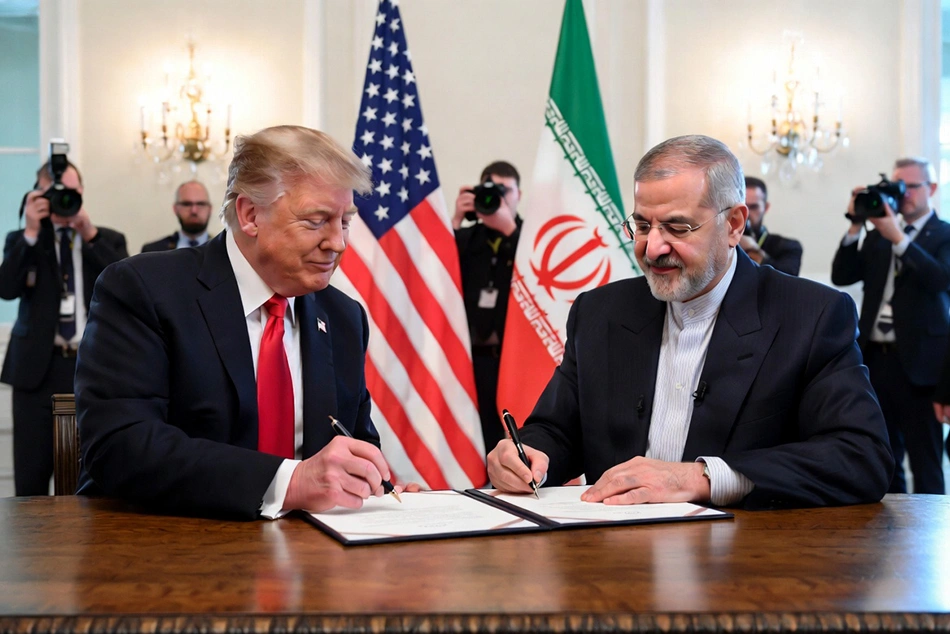
[Image generated by Grok AI]
The diplomatic momentum generated by the recently signed Islamabad Memorandum between the United States and Iran was widely regarded as one of the most significant developments in Middle Eastern politics since the collapse of the Joint Comprehensive Plan of Action (JCPOA). After more than 110 days of military confrontation, economic disruption, and regional instability, Washington and Tehran appeared closer than ever to reaching a comprehensive peace agreement. The memorandum established a framework for a permanent ceasefire and outlined a roadmap toward a final treaty within sixty days. However, as preparations were underway for the decisive negotiations in Switzerland, reports emerged that the talks might be delayed. The postponement has raised a critical question:
Is Israel deliberately creating conditions that could derail the final agreement?
The Islamabad Memorandum includes fourteen provisions, of which thirteen are widely perceived as favourable to Iran. The agreement provides Tehran with significant political, economic, and security concessions in exchange for limits on its nuclear programme and a commitment to regional de-escalation. Such a framework represents a dramatic departure from years of sanctions, military threats, and diplomatic isolation. For many observers, this shift signals recognition by Washington that a negotiated settlement is preferable to a prolonged regional conflict whose costs have become increasingly unsustainable.
At the heart of the agreement lies the first provision: an immediate and comprehensive ceasefire across all fronts, including Lebanon. This clause is arguably the most fragile element of the entire framework. Any continuation of Israeli military operations in Lebanon could immediately undermine confidence in the agreement and provide grounds for Iran to suspend its commitments. The inclusion of Lebanon in the ceasefire arrangement reflects the reality that the Iran-Israel confrontation extends far beyond direct interactions between Tehran and Washington. It encompasses a broader regional security architecture involving Hezbollah, Syria, Lebanon, and the wider Middle East.
The possibility that Israel may not fully support the agreement has become a growing concern among diplomats. Prime Minister Benjamin Netanyahu has consistently opposed arrangements that he believes strengthen Iran economically or politically. From Israel’s perspective, the memorandum grants Tehran substantial benefits while requiring only limited concessions. The proposed removal of sanctions, access to frozen assets, facilitation of oil exports, and the establishment of a reconstruction fund worth at least $300 billion could transform Iran’s economic fortunes. Israeli policymakers, after years of advocating a strategy of maximum pressure against Tehran, are unlikely to welcome these outcomes.
The sixth provision of the memorandum illustrates why the agreement has generated concern in Israel. The proposed reconstruction and development fund would not be financed by the United States but largely by Gulf Arab states. The rationale is straightforward. The Gulf economies have suffered enormously from regional instability, disruptions in maritime trade, and rising security expenditures. A stable Iran integrated into the regional economy could contribute to economic growth across the Persian Gulf. However, from an Israeli strategic perspective, economic recovery in Iran could eventually translate into increased regional influence and enhanced military capabilities.
Another significant aspect of the memorandum is the eighth provision concerning Iran’s nuclear programme. Iran agrees to cease its pursuit of nuclear weapons and reduce uranium enrichment levels, all under the vigilant oversight of the International Atomic Energy Agency. This clause addresses Washington’s primary security concern and is presented as the cornerstone of the agreement. Yet critics argue that the provision effectively acknowledges Iran’s right to maintain a peaceful nuclear programme while removing many of the economic pressures that previously constrained its activities. For Israel, which has long viewed Iran’s nuclear infrastructure as an existential threat, such a compromise may appear inadequate.
The delay in the Switzerland talks, therefore, cannot be understood solely through the lens of US-Iran relations. It must also be analysed in the context of Israel’s broader regional objectives. Since the outbreak of the Gaza war in October 2023, Israel has pursued an aggressive military strategy aimed at degrading the capabilities of Hamas and Hezbollah. The conflict expanded beyond Gaza, drawing in regional actors and ultimately contributing to confrontations between Israel and Iran. Over time, wider geopolitical considerations overshadowed the original issue of Gaza.
Gaza and Palestine
One of the most striking features of the Islamabad Memorandum is the complete absence of any reference to Gaza. The conflict that initially triggered the regional crisis has effectively disappeared from the negotiating agenda. There is no provision addressing Palestinian reconstruction, humanitarian assistance, political rights, or a future peace process. Instead, the focus has shifted toward stabilising U.S.-Iranian relations and managing broader regional security concerns. This omission has profound implications. Iran had initially positioned itself as a defender of the Palestinian cause, supporting resistance movements and condemning Israeli military operations. However, after months of confrontation and mounting economic pressure, Tehran appears to have prioritised national survival over broader ideological objectives. The result is a diplomatic framework in which Gaza is no longer central to regional negotiations.
Critics argue that this shift has effectively benefited Israel. While international attention focused on the possibility of war between Iran and the United States, Israel continued military operations in Lebanon and Gaza. According to these critics, the weakening of Hezbollah and the erosion of Iranian regional influence has altered the strategic balance in Israel’s favour. Even if future agreements require territorial withdrawals or ceasefires, Israel may negotiate from a significantly stronger position than before the conflict. Particular attention has been directed toward southern Lebanon. Analysts sympathetic to Iran contend that Israel’s military campaign has sought to establish long-term strategic control over areas extending toward the Litani River. Whether such claims are fully accurate remains debated, but territorial and security considerations in Lebanon are central to Israeli calculations. Consequently, a comprehensive ceasefire encompassing Lebanon could limit Israel’s operational freedom and reduce its leverage.
The uncertainty surrounding the Switzerland talks has, therefore, fuelled speculation that continued military activity in Lebanon may not be accidental. If hostilities persist, Iran could argue that the ceasefire provisions of the memorandum have been violated, thereby delaying or suspending further negotiations. Such an outcome would effectively prevent the transition from an interim understanding to a legally binding treaty.
For the United States, the memorandum represents a diplomatic achievement. Washington secures commitments on nuclear oversight, freedom of navigation through the Strait of Hormuz, and regional de-escalation without becoming embroiled in another costly military conflict. The fifth provision guaranteeing safe maritime transit through the Strait of Hormuz is particularly important. Given that nearly one-fifth of global oil shipments pass through this waterway, stability in the Gulf carries enormous implications for international energy markets and inflation. At the same time, the agreement allows the United States to reduce its military footprint near Iran following the conclusion of a final treaty. This aligns with broader American efforts to shift strategic attention toward competition with China and emerging challenges in the Indo-Pacific region.
For Iran, the benefits are equally significant. The lifting of sanctions, access to frozen assets, increased exports, and external investment could provide relief from years of economic hardship. Inflation, unemployment, and currency depreciation have imposed severe burdens on Iranian society. The memorandum offers a pathway toward economic recovery without requiring regime change or fundamental political transformation. Nevertheless, opposition remains strong within Iran. Hardline factions and elements of the Islamic Revolutionary Guard Corps view the agreement with suspicion. They express concerns about excessive dependence on foreign investment and question Washington’s trustworthiness in honouring its commitments. Similar scepticism exists in the United States, where critics argue that Tehran is receiving substantial concessions in exchange for promises that may prove difficult to verify.
Ultimately, the success or failure of the final agreement will depend on developments in the coming weeks. If the Switzerland talks proceed and produce a legally binding treaty, the Islamabad Memorandum may be remembered as a historic turning point in Middle Eastern diplomacy. If negotiations collapse, however, it will join a long list of failed initiatives that promised peace but succumbed to geopolitical rivalries and mutual distrust. What is already evident is that the principal victims of the broader conflict have been Gaza and Lebanon. While Iran, Israel, and the United States possess the resources and political capacity to recover from war, the humanitarian devastation in Gaza and the destruction in Lebanon continue to deepen. The Gulf states may finance reconstruction and absorb economic losses, but the human consequences of the conflict cannot be reversed so easily.
As the negotiations in Switzerland face uncertainty, one reality remains clear: The future of the Middle East will not be determined solely by the text of the Islamabad Memorandum. It will depend on whether regional actors, particularly Israel and Iran, are willing to subordinate short-term strategic gains to a broader vision of long-term stability. The delay in the final talks indicates that this objective is still uncertain.
[The writer, Dr Syed Mohammad Raghib, completed his PhD from the School of International Studies, JNU, New Delhi.]
Follow ummid.com WhatsApp Channel for all the latest updates.
Select Language to Translate in Urdu, Hindi, Marathi or Arabic