Language, Bias, and Violence: Why We Must Name Terrorism Fairly
Defending Islam requires more than citing scripture. It demands consistent, visible rejection of violence from within Muslim communities, while the global community must judge acts of terror by what they are—not by who commits them.
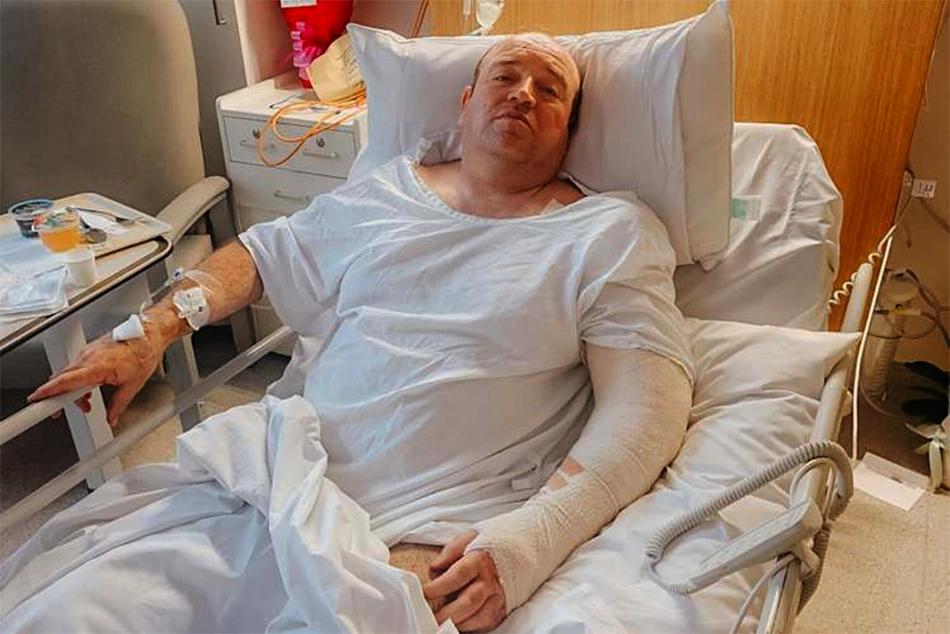
[Ahmed al Ahmed, who risked his life by wresting a gun from an attacker in Australia's deadly mass shooting, is also a source of pride for his hometown in Syria.]
On 14 December, during a Hanukkah celebration at Bondi Beach in Australia, at least 15 Jewish civilians, including a child, were killed in a terror attack. Authorities swiftly declared the incident an anti-semitic act carried out by a father–son duo. Australian police identified the suspects as 50-year-old Sajid Akram and his 24-year-old son, Naveed Akram. The father was killed at the scene by police, while the son was critically injured and later taken into custody.
Australian Prime Minister Anthony Albanese immediately condemned the violence as “act of antisemitism... [and] terrorism...”
Amid the chaos, a 43-year-old Muslim bystander, Ahmed al-Ahmed, tackled and disarmed one of the attackers, an act of courage that saved many lives. His bravery was widely praised, local authorities called a hero. Similarly, kebab shop owner Youssef Hamdan rushed to help resuscitate victims. Yet, while two Muslims risked their lives to save others, two Muslims committed the attack. Too often, however, the world prefers to see only one side of that reality.
Any act of terror, regardless of the perpetrator’s background, religion, ethnicity, or ideology, must be condemned without hesitation. Civilians everywhere deserve safety, dignity, and justice. Violence driven by hatred must be denounced clearly by religious leaders, political authorities, and civil society alike. Condemning antisemitism and condemning Islamophobia are not competing moral duties; they are inseparable. The deliberate killing of civilians is always wrong, everywhere, by anyone.
At this point, I am reminded of the 13th-century Persian poet Saadi Shirazi, whose famous verses from the Golestan declare:
banī-ādam aʿzāy-e yek peikarand
keh dar āfarīnesh ze yek goharand
cho ʿozvī be-dard āvarad rūzgār
degar ʿozvhā rā namānad qarār
to k’az meḥnat-e dīgarān bī-ghamī
nashāyad keh nāmat nahand ādamī
A close English rendering reads:
“Human beings are members of one body;
Created from the same essence and soul.
If one part is afflicted with pain,
The others cannot remain at peace.
If you feel no sympathy for human suffering,
You do not deserve to be called human.”
Yet global discourse around violence too often reveals selective outrage, selective blame, and selective silence. When a Muslim commits violence, their religion is frequently foregrounded as the motive. When others commit mass killings, media narratives tend to stress mental health, personal struggle, or individual pathology. This double standard reinforces a false and damaging association between Islam and terrorism.
Comedian Trevor Noah highlighted this disparity in his 2015 special “Lost in Translation” when discussing the Charleston church shooting, where nine African Americans were murdered by white supremacist Dylann Roof. He critiques:
“So weird, how our prejudices have given everyone their lane. Middle Easterner does something, they're a terrorist. Black person does something, they're gang-related, they're a thug. But if a white guy walks into a church killing nine people there, what do they lead with on the news?”
“And today, in an isolated incident, a lone gunman walked into a church opening fire and killing nine people. It's always a lone gunman. A lone gunman with no ties to society whatsoever. They always separate them as quickly as possible.”
Noah further highlighted how media outlets routinely emphasise mental instability in such cases while avoiding the term “terrorism.” He argued that Roof’s actions; entering a place of worship and murdering civilians to advance a hateful ideology, constituted terrorism by any reasonable definition. To deny that label, Noah suggested, is itself a form of racial bias. His broader point was not to minimise mental illness but to expose how public language selectively shields certain perpetrators from ideological accountability.
By contrast, Islamic scripture is unequivocal on the sanctity of human life. Holy Qur’an states:
“Whoever kills a soul, unless for a soul or for corruption in the land, it is as if they have killed all of humanity; and whoever saves a life, it is as if they have saved all of humanity.”
There is no credible teaching within Holy Qur’an or the authentic Islamic tradition that endorses the killing of non-Muslims or any group of civilians. Claims otherwise reflect political distortion rather than serious engagement with Islamic scholarship.
At the same time, some non-Muslims perceive that Muslim leadership has not sustained highly visible, unified campaigns condemning extremism. While statements are issued, they have often failed to develop into enduring moral movements capable of decisively challenging extremist narratives. This absence weakens moral authority and allows extremists to misrepresent Islam.
History makes clear that terrorism is not confined to any single religion or identity. Anders Breivik in Norway killed 77 people in 2011, Brenton Tarrant murdered 51 Muslims in Christchurch, New Zealand, in 2019, Dylann Roof killed nine African Americans in a Charleston church in 2015, and Baruch Goldstein in Hebron killed 29 Palestinians in Hebron in 1994, remind us that violent extremism has appeared across multiple communities and religions. These crimes are not used to define Christianity or Judaism as inherently violent. To apply that logic only to Islam is prejudice, not analysis.
Islam, like other faiths, does not teach terror; it forbids it. The Qur’anic moral vision is explicit: taking an innocent life is like killing all humanity, while saving a life is like saving all humanity.
Defending Islam requires more than citing scripture. It demands consistent, visible rejection of violence from within Muslim communities, while the global community must judge acts of terror by what they are—not by who commits them.
Justice must not depend on geography. Grief must not depend on identity. If the term “terrorism” is to retain meaning, it must be applied universally and without favour, because human beings are members of a single whole, created from one essence and soul.
[Azmat Ali is a New Delhi–based writer in English and Urdu who focuses on literature, religion, and politics.]
Follow ummid.com WhatsApp Channel for all the latest updates.
Select Language to Translate in Urdu, Hindi, Marathi or Arabic