Lionel Messi's Tour and India’s Sporting Ecosystem
Lionel Messi's India Tour has exposed glaring gaps in event management, administrative preparedness, priorities in sports development, and even political optics.
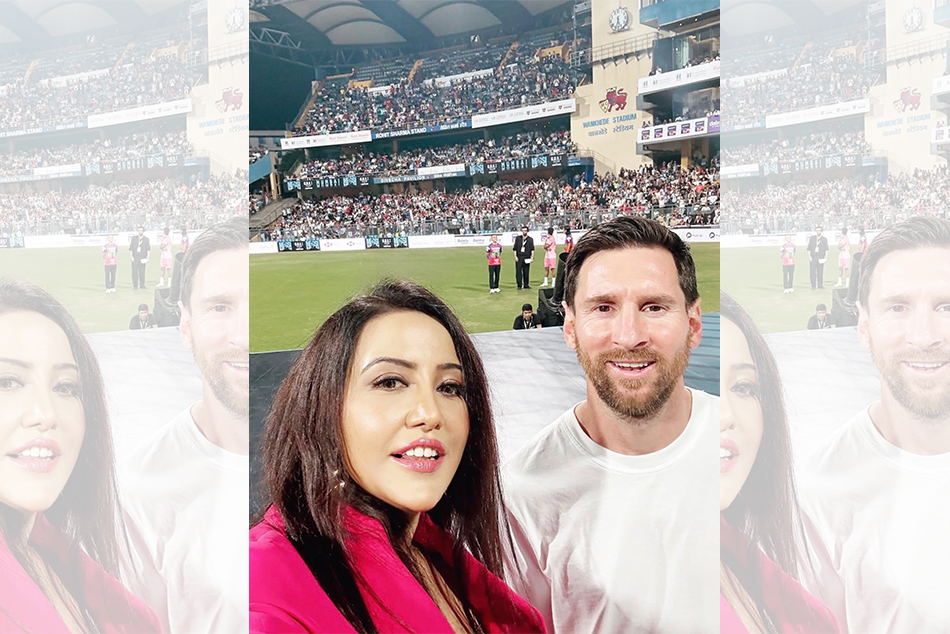
["Legendary pop star Amruta Fadnavis with a fan." (A social media user shared the above image with this cryptic one liner)]
The recent visit of football legend Lionel Messi to India created unprecedented buzz across the country. For a nation where football enjoys a deeply passionate following, particularly in select cities, Messi’s arrival was expected to be nothing short of historic. Fans anticipated a moment of celebration, inspiration, and renewed interest in the sport.
However, what unfolded across multiple cities told a very different story. The tour exposed glaring gaps in event management, administrative preparedness, priorities in sports development, and even political optics. Far from being a purely sporting celebration, Messi’s visit increasingly appeared to be a business-driven spectacle.
In the aftermath of this high-profile event, several critical questions have emerged regarding governance, accountability, and the future of football in India. These questions demand serious reflection and honest answers. This article attempts to examine those concerns and explore what Messi’s visit truly revealed about India’s sporting ecosystem.
Unprecedented Hype, Unprecedented Chaos
Messi’s India tour included three major public events in Kolkata, Delhi, and Mumbai, along with a private visit to Jamnagar at the Ambani residence. The excitement surrounding the football icon was unmatched. However, so was the chaos.
From overcrowded venues to questionable priorities, the tour gradually shifted focus away from football and turned into a story of mismanagement, optics, and business interests.
Kolkata: Where Passion Met Poor Planning
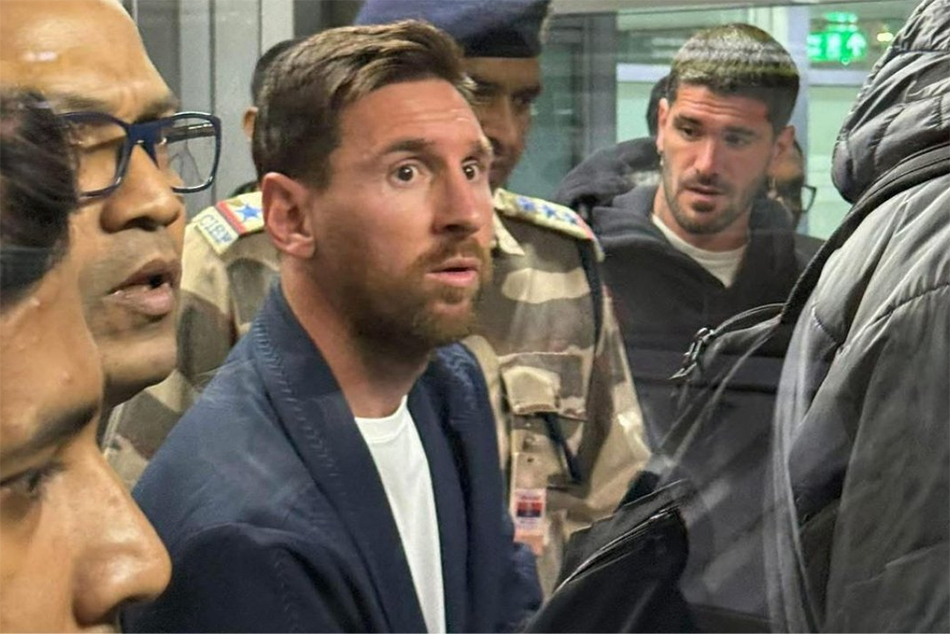
Kolkata, often referred to as the football capital of India, boasts one of the most devoted football fanbases in the country. Expectations were naturally high. Unfortunately, the event descended into chaos as authorities failed to control an over-excited and massive crowd attempting to enter the stadium. The situation deteriorated to such an extent that organisers were compelled to escort Messi away from the venue, denying thousands of fans even a glimpse of their idol.
What aggravated the disappointment was the fact that many fans had paid as much as ₹12,000 for passes, only to return frustrated, dejected, and feeling cheated. The episode raises a serious and uncomfortable question: are Indian authorities truly competent enough to manage mass-level events of such magnitude?
A Pattern of Incompetence in Crowd Management
The Kolkata fiasco was not an isolated incident. Similar failures were witnessed earlier this year during the Kumbh Mela in Uttar Pradesh and at several overcrowded railway stations in the National Capital.
Together, these incidents point towards a systemic failure in crowd control, planning, and accountability, endangering public safety while steadily eroding public trust in administrative capability.
Delhi: Football Meets Pollution Politics
The Delhi event once again attracted a massive gathering, with several dignitaries in attendance, including Chief Minister Rekha Gupta. However, amid cold weather, dense fog, and dangerously high AQI levels, the public reaction told a different story. As the Chief Minister appeared, people spontaneously shouted in chorus, “AQI! AQI!”
The chant was a powerful reflection of the daily suffering endured by Delhi’s residents. Unfortunately, the government’s response to the pollution crisis has largely been reduced to symbolic and often laughable measures.
From banning tandoors to trivialising AQI as a number that can be casually gauged through devices and apps, such statements reveal a troubling lack of seriousness and scientific understanding in leadership—something a national capital hardly deserves.
Mumbai: Better Organisation, Worse Optics
Mumbai’s event was relatively better organised, yet it introduced a different kind of embarrassment. The spotlight visibly shifted from Messi and football to Bollywood celebrities, with Maharashtra Chief Minister Devendra Fadnavis seen felicitating film stars like Ajay Devgn and Tiger Shroff. This raised uncomfortable questions about the real purpose of the event.
The most criticised moment, however, involved Amruta Fadnavis, singer and wife of the Chief Minister. Her conduct constantly chewing something, attempting to capture selfies, and displaying questionable hosting etiquette was widely criticised by netizens as disrespectful and arrogant. Such behaviour stands in stark contrast to India’s professed cultural value of “Atithi Devo Bhava”. Ironically, those in power appear least interested in upholding it.
Not so dear @fadnavis_amruta, your appearance as First Lady of Maharashtra was utterly irritating & shocking…
— Archana Pawar 🇮🇳 (@SilentEyes0106) December 14, 2025
Chewing gum in front of those gentlemen? I mean why? what were you trying to prove?
Have some decency in life please…!pic.twitter.com/CwHnXa7Bzr https://t.co/ezFaICZ7yq
Fans Left Behind, Power Put on Display
The fundamental question remains: Who was this event really meant for?
Was it organised for football fans, for young aspirants dreaming of playing the game, or for genuinely promoting football in India? Or was it merely a platform for political visibility, celebrity worship, and the misuse of power?
Fans who invested their money, time, and emotional energy were pushed to the margins, while individuals with little or no relevance to the sport occupied centre stage.
A Business Event Disguised as Football Celebration
Messi’s four-day India tour was, at its core, a business-driven spectacle. Sponsors and corporations eagerly queued up to associate their brands with the global icon. Ironically, not a single major corporate house stepped forward to invest in grassroots football coaching, systematic player grooming, or infrastructure development.
Experts estimate that establishing proper football infrastructure across regions would require around ₹60 crore—a modest sum when compared to the money spent on high-profile events. Yet, neither corporate entities nor the Sports Ministry showed any genuine interest.
Indian Football: A Game in Total Disarray
The current state of football administration in India further reflects this neglect. Uncertainty continues to hover over the Indian Super League, while the historic I-League remains trapped in mediocrity, plagued by poor visibility and low match attendance. Despite hosting a global icon like Messi, the ecosystem required to nurture future football talent remains either non-existent or severely underfunded.
On the other hand, sports like Cricket gets it all, while others get nothing. India’s sporting investments continue to overwhelmingly favour cricket, where money flows effortlessly.
Meanwhile, football struggles for relevance, hockey and India’s national sport remains virtually orphaned, and other non-cricket sports survive on scraps. This imbalance reflects not a shortage of resources, but a glaring lack of vision and intent.
Conclusion: Building Brands or Building Players?
India clearly possesses the financial capacity to host grand, high-profile business events featuring global icons like Lionel Messi. What remains conspicuously absent, however, is the political will and sustained institutional commitment required to nurture and invest in homegrown sporting talent.
As long as the focus remains fixated on optics rather than outcomes, on celebrities rather than sportspersons, and on one-off spectacles rather than long-term sporting ecosystems, India will continue to admire greatness from afar without ever producing it domestically.
Hosting legends may generate momentary excitement and brand value, but it does little to strengthen the foundations of the sport. The real need of the hour is a strategic shift towards grassroots development, infrastructure, coaching, and consistent policy support. It is time for India to seriously rethink its priorities. It is time to invest in players, not just in spectacles.
[The writer, Mohd Ziyauallah Khan, is a freelance content writer & editor based in Nagpur. He is also an activist and social entrepreneur, co-founder of the group TruthScape, a team of digital activists fighting disinformation on social media.]
Follow ummid.com WhatsApp Channel for all the latest updates.
Select Language to Translate in Urdu, Hindi, Marathi or Arabic