Explainer: Why BJP’s Confidence is Fraying on the Ground
What should worry the BJP’s strategists is not any one poll number but the pattern underneath: a governing party discovering that its most effective opposition in 2026 was not the Congress or a regional rival but a satirical Instagram page turned street movement, staffed by people too young to remember the party’s rise
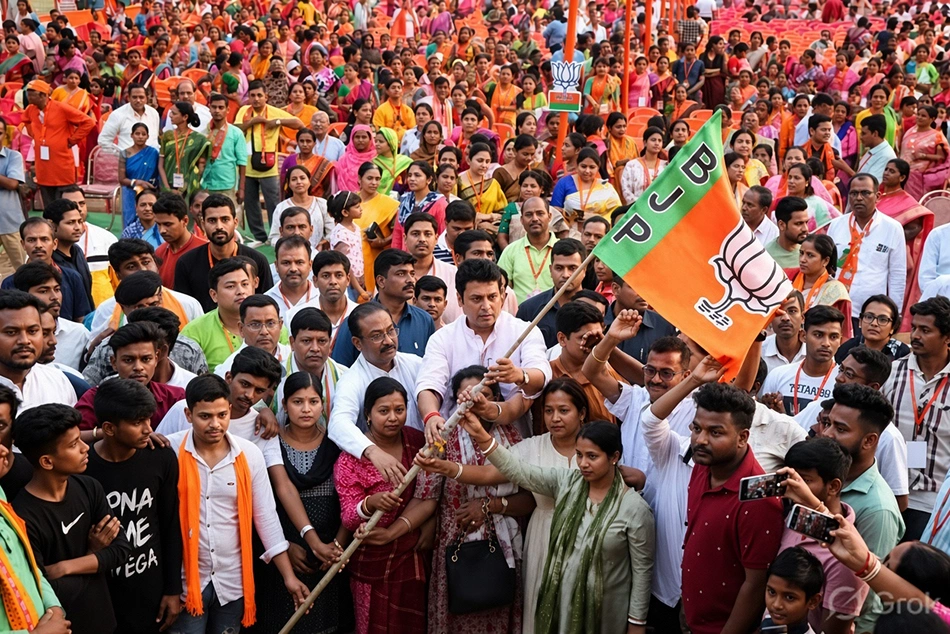
For a decade, the Bharatiya Janata Party’s political grammar rested on a single, load-bearing sentence: Modi hai to mumkin hai — with Modi, anything is possible. It was less a slogan than a claim on the future itself, and it worked because it fused personal charisma with an aura of inevitability. In 2026, that sentence is being read back to the party as a question.
Is it still mumkin?
The evidence from the ground — electoral, institutional, and generational, suggests the BJP itself is no longer certain of the answer.
An Uneven, Not a Sweeping Map
The BJP’s 2026 assembly performances tell a story of contraction rather than command. In Kerala, the NDA’s tally barely moved past single digits despite years of outreach investment, with the UDF and LDF dividing the state as before; analysts pointed to the government’s amendments to the Foreign Contribution (Regulation) Act as a specific irritant that cost the party its fragile inroads among Christian voters.
In West Bengal, early trends showed the BJP gaining in pockets even as Trinamool’s core coalition held — a mixed picture the party’s own leaders oversold as a sweep before the final count sobered the claim.
Karnataka’s earlier upheaval, which cost the party a chief minister within two days of his own swearing-in, still echoes in how gingerly the central leadership now handles state units.
None of this is collapse. But none of it is the arithmetic of inevitability either — and a party built on the promise of inevitability cannot afford arithmetic that merely muddles through.
The Cockroach Lesson
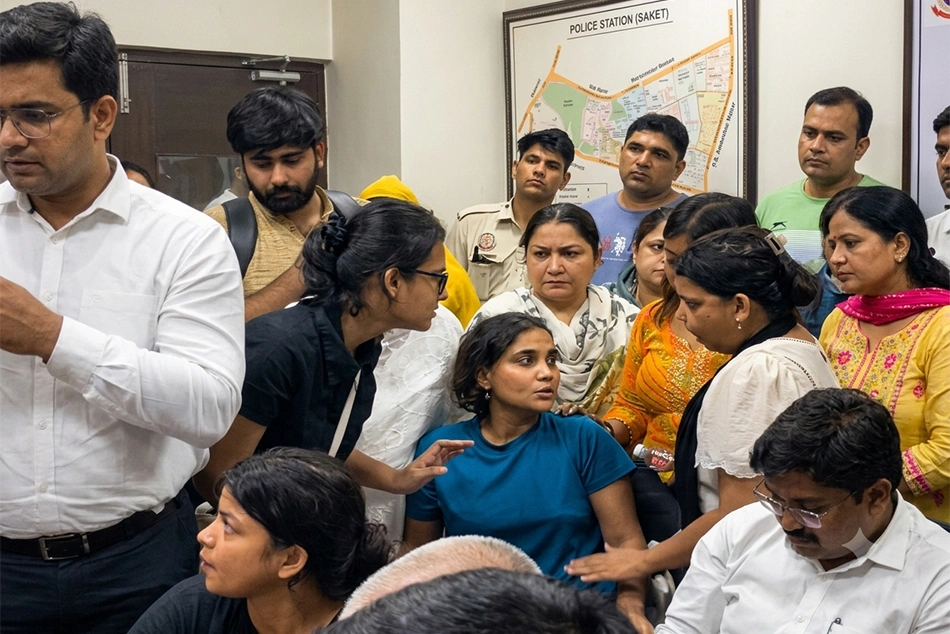
Nothing has exposed the gap between the BJP’s messaging machine and the country’s actual mood quite like the Cockroach Janta Party. It began as a piece of digital sarcasm — a retort to Chief Justice Surya Kant’s remark comparing unemployed, litigation-minded youth to “cockroaches” and “parasites.” Within weeks it had become a genuine mobilisation: tens of thousands at Jantar Mantar, a satirical party with a serious five-point charter on judicial reform, electoral integrity, women’s reservation, media concentration and the anti-defection law, and a single unifying grievance — the 2026 NEET paper-leak scandal, whose cancellation and fallout were linked to a wave of student suicides.
The movement did in ten weeks what the BJP’s IT cell and its nationalism narrative could not do in ten years: it gave India’s Gen Z a shared political vocabulary for its anger. That the government’s response included tear gas, baton charges and over a hundred detentions before Education Minister Dharmendra Pradhan finally resigned in July is itself the story. A party confident of its narrative negotiates early. A party that reaches for riot gear is one that has lost the argument and is trying to win the street instead.
From Nationalism to Defensiveness
The deeper diagnosis is not electoral arithmetic but narrative fatigue. Nationalism as a governing story works when it is aspirational; it curdles when it is used to deflect accountability — on unemployment, on examination integrity, on the conduct of institutions meant to be above the fray.
The CJI’s own remarks, later walked back as directed only at fraudulent degree-holders, landed instead as evidence of an establishment — judicial, executive, and party — that had grown comfortable dismissing dissent rather than answering it.
That reflex, more than any single defeat, is what commentators mean when they describe the party as arrogant: not merely confident, but unaccustomed to being questioned, and visibly uncomfortable when it is.
What the BJP Still Has
Fairness requires the other half of the ledger. The BJP retains the deepest cadre network in Indian politics, a fundraising advantage no rival matches, and a Prime Minister whose personal approval — while dented — remains well ahead of any single opposition figure’s.
The 2026 results were not a rout; in several states the party’s vote share held even where seats did not follow. The opposition, for its part, has yet to convert youth anger into a durable electoral coalition of its own — the CJP is explicitly not a registered party and has no candidates to show for its energy. Confidence eroded is not the same as power lost.
The Real Warning
What should worry the BJP’s strategists is not any one poll number but the pattern underneath: a governing party discovering that its most effective opposition in 2026 was not the Congress or a regional rival but a satirical Instagram page turned street movement, staffed by people too young to remember the party’s rise.
Ground confidence, once built on the certainty that the story was working, is now built on managing the story’s failure to land. That is a harder, and far less comfortable, kind of politics to practise — and it is the one the BJP now finds itself in.
[The writer, Nihar Nalini Sarangi, is a Political Commentator.]
Follow ummid.com WhatsApp Channel for all the latest updates.
Select Language to Translate in Urdu, Hindi, Marathi or Arabic